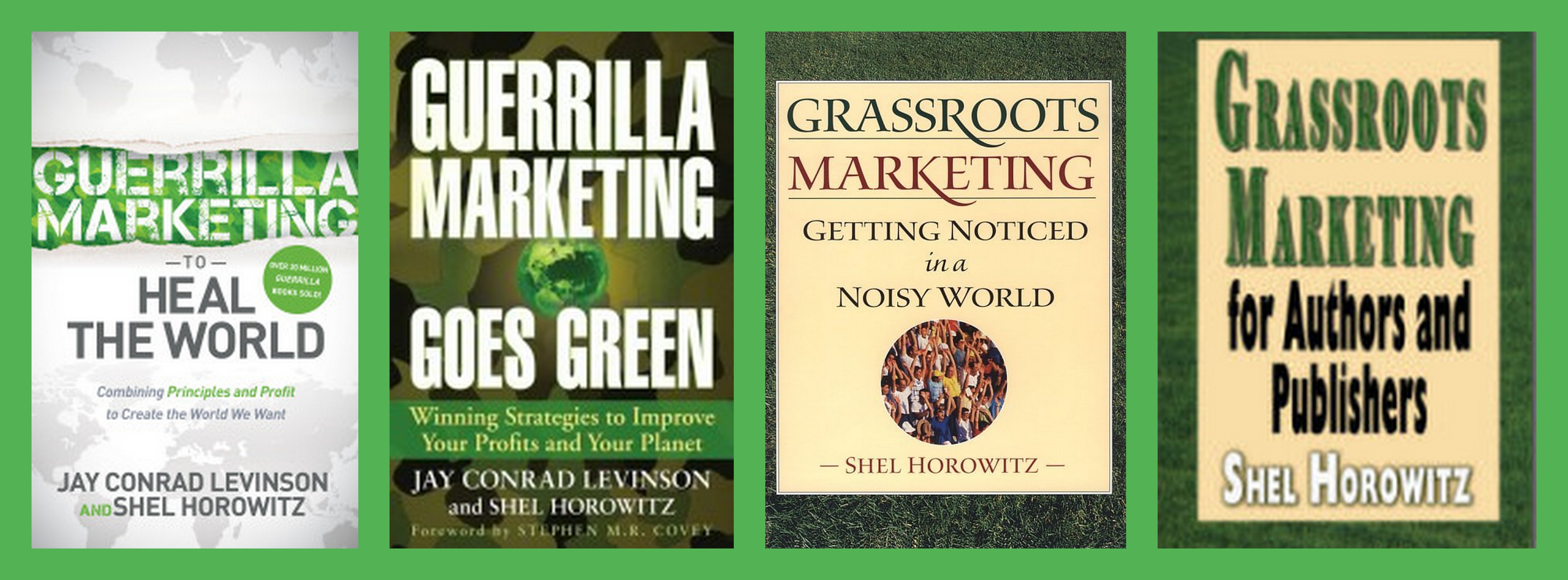
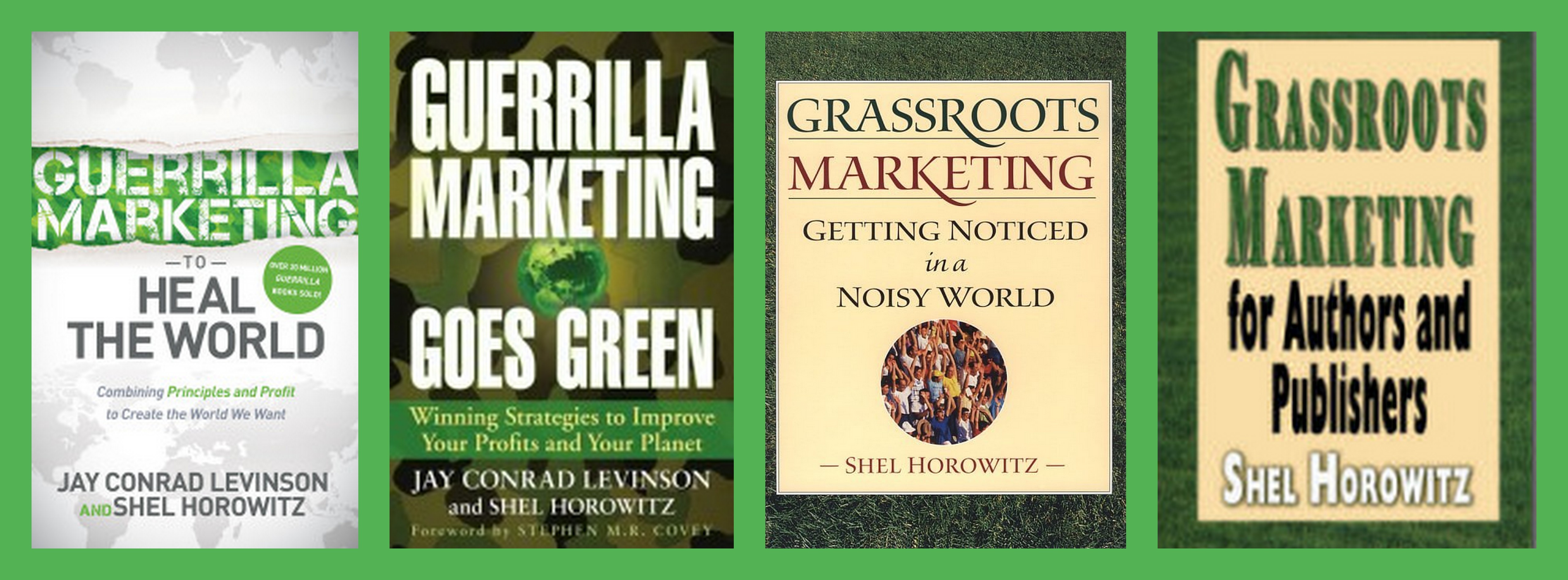
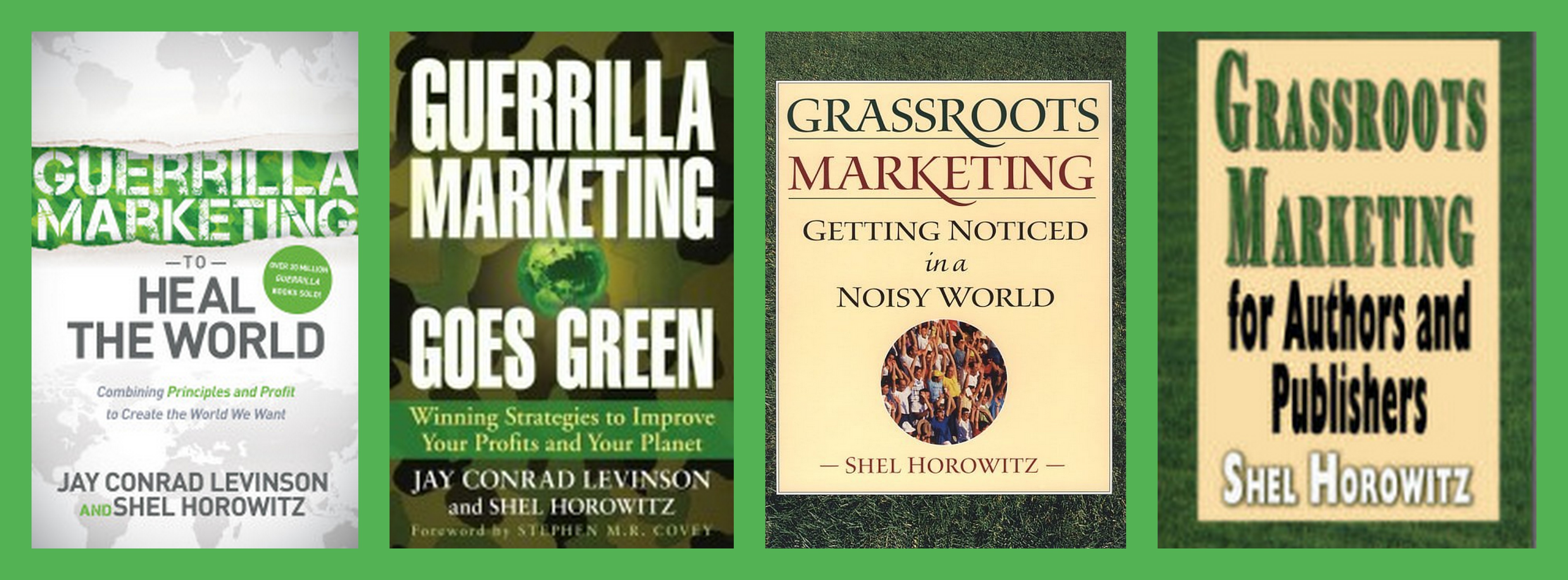
The Clean and Green Club, February 2026

<!doctype html>


Having trouble reading this as an email? Please visit thecleanandgreenclub.com to read it comfortably online.

Shel Horowitz’s Clean and Green Marketing Tip: February 2026

Great news! All of my eBooks with a publication date through 2023 are now free to subscribers to The Clean and Green Club (the monthly newsletter I’ve been publishing in some form all the way back to 1997). https://shelhorowitz.com/shels-green-products-and-services/
It’s a “Both, And”
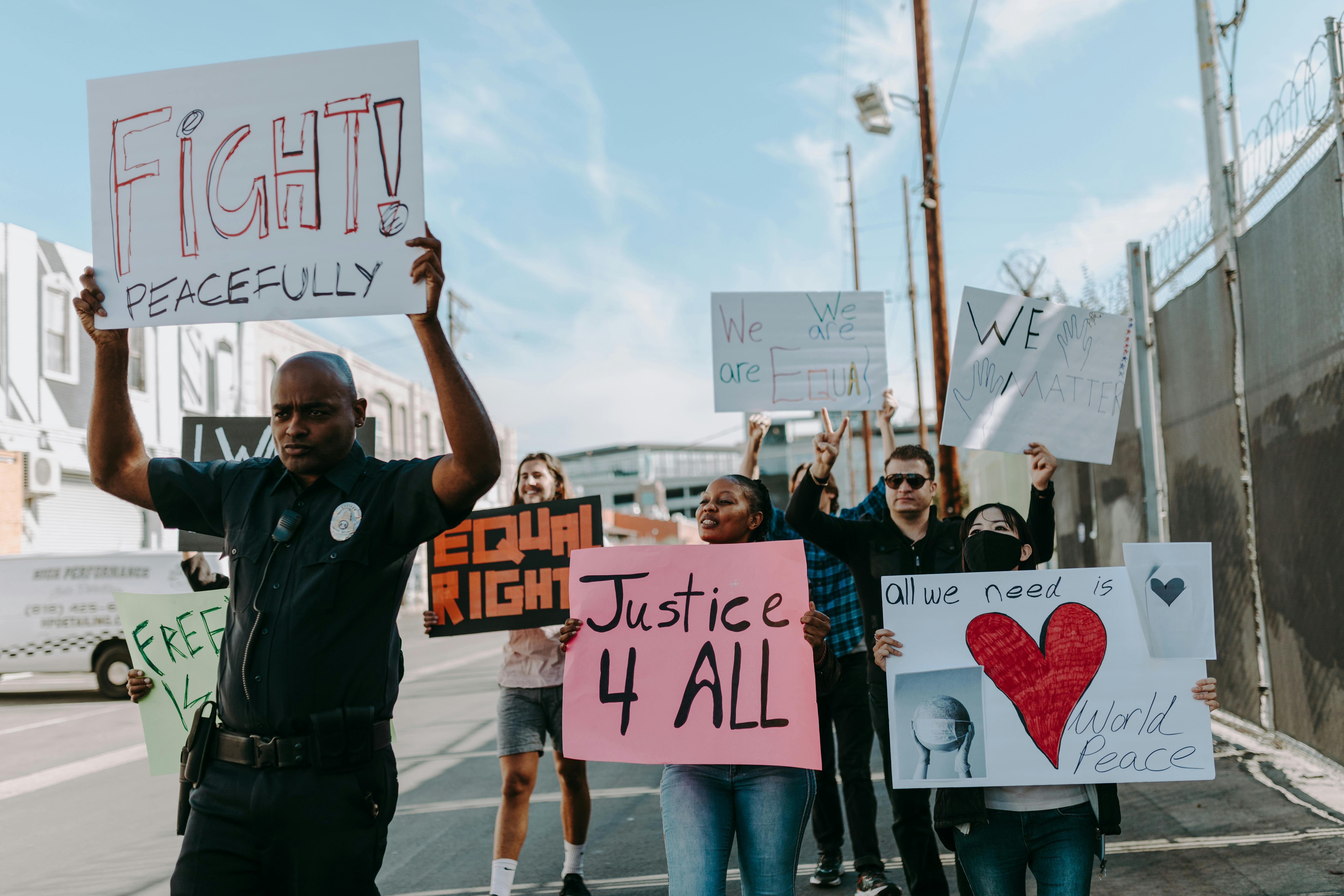
People making protest posters
Image: Photo by Alena Darmel via Pexels

“Don’t find customers for your products, find products for your customers.”

—Seth Godin, “Building Blocks of Marketing”

I usually agree with Seth Godin, who I read daily. But this time, I see it as not “either/or”

but “both, and.” Absolutely, find products for your customers. Ask yourself some
important questions, like:

  • Why did they buy what they bought from me?
  • What other products or services would add value to that previous purchase?
  • What other products or services would address other needs that someone who bought for that reason might have?
  • What would be the next product they would want after success with the first one, and why?
  • How will I create and distribute marketing messages specifically designed to attract existing customers’/clients’ attention to the new offer?

But also ask another set of questions, like:

  • Who outside of my existing market would have a need or desire for this product or service—and why?
  • How could it be repurposed for new markets with no changes? For example, a creative new tool that helps carpenters might also be useful to plumbers, roofers, masons, etc.
  • How could it be repurposed for new markets with smallish changes? A book or online course on the business end of chiropractic could easily be repurposed for other medical specialties with 10-20% new content, because the business side is going to be pretty similar: you will still address the challenges of bringing in patients, working with staff, dealing with government regulation, etc.
  • How will I create and distribute marketing messages specifically designed to attract and resonate with this new market? If you’ve been reading this newsletter for a few years, you might remember that I’ve talked about different marketing messages when you’re marketing the same green product to Deep Greens, Lazy Greens, Non-Greens, and Anti-Greens.
  • And, very importantly, can I provide adequate support for the people within that market—how much and what sort of new expertise and infrastructure will I have to acquire or bring on board? If the answer is no, don’t expand into it until you can answer with a yes.

I ask questions like these (and many others) in my consulting practice, to uncover new
possibilities and also to make sure the realities are clear. If that would be useful to you,
please get in touch. I offer first-timers a 15-minute freebie consult:
https://calendly.com/meet-shel/15min

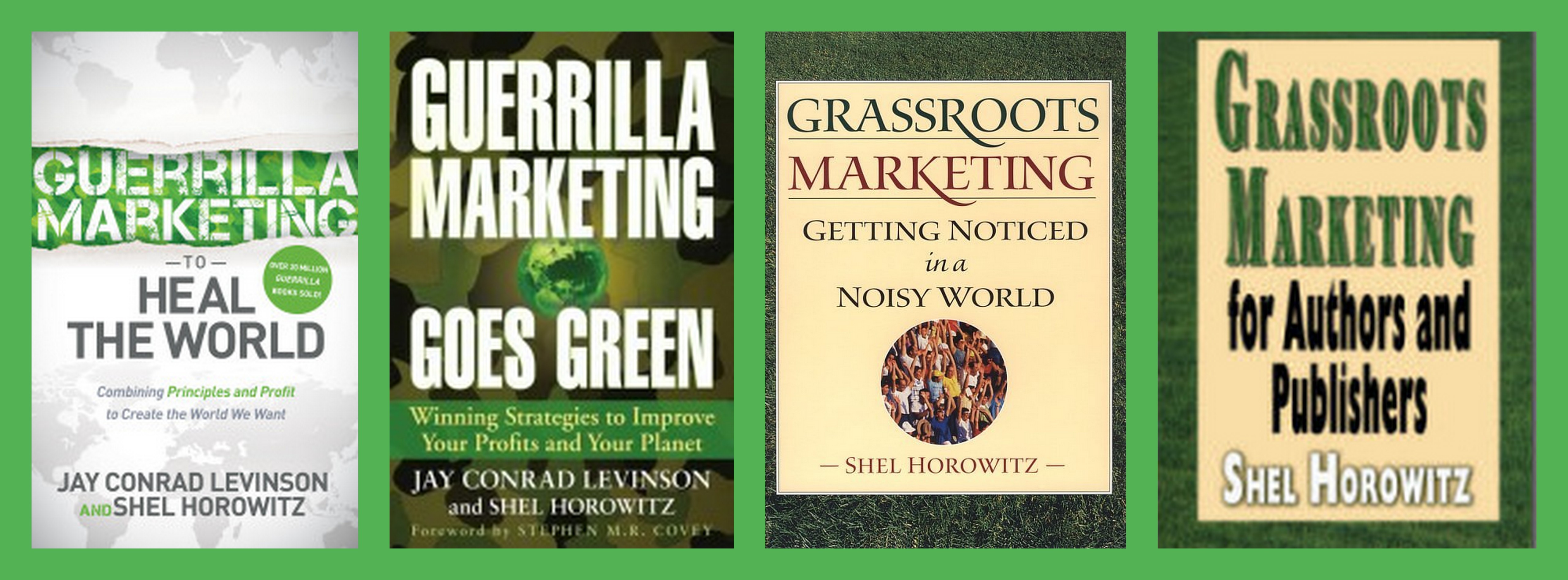
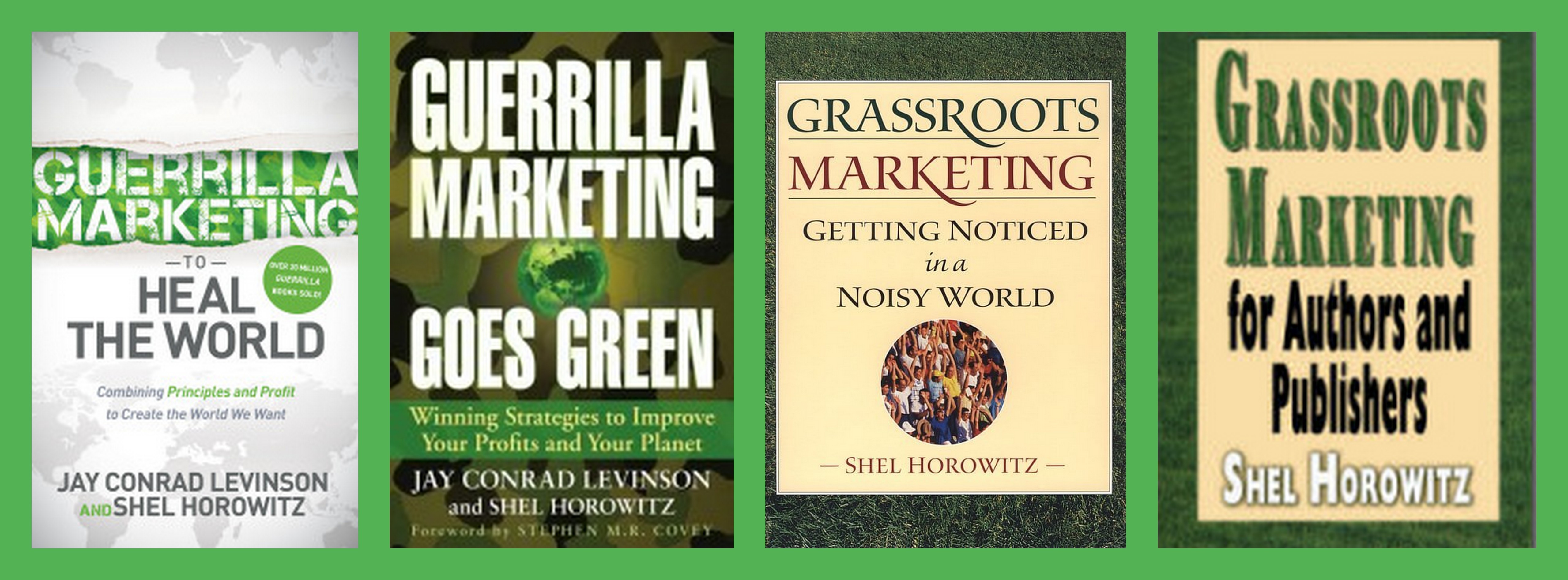
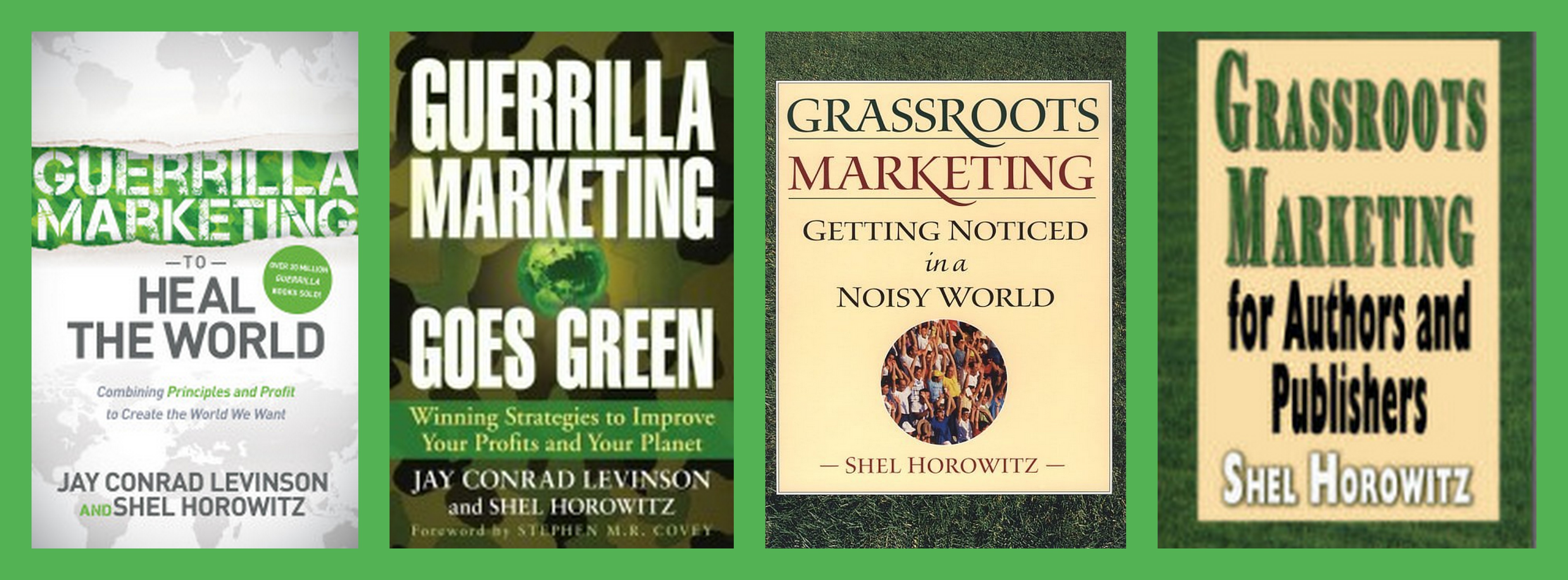
Discover why Chicken Soup’s Jack Canfield, futurist Seth Godin, and many others recommend Shel’s 10th book, Guerrilla Marketing to Heal the World (and download a free sampler). Autographed and inscribed copies available.
Janette Anderson interviewed me for a wonderful episode on how to be an activist at any age. This was the first time I devoted an entire interview or talk to this topic, which I hope to turn into my 11th book.

You can watch at
https://www.youtube.com/watch?v=-kzxdZ37HT8&t=2s You can also visit my interviews page to read 22 highlights from that interview.


View highlights from (and listen to) more than 30 podcasts ranging from 5 minutes to a full hour. Click here to see descriptions and replay links.

From Ellen Finkelstein:

A couple of friends have been frustrated by not seeing progressive politicians or well-known thought leaders offer positive ideas for improving life in the United States. So we decided to create a place for anyone to post ideas on a variety of topics, such as gun violence, healthcare, homelessness, poverty, immigration, and more. And we hope people who can implement them will notice. It’s a simple site but it works.

Please post your ideas here and then share the site! https://www.project2029.community

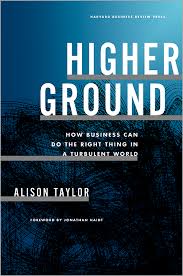
Higher Ground: How Business Can Do the Right Thing in a Turbulent World

Higher Ground: How Business Can Do the Right Thing in a Turbulent World

By: Alison Taylor (Harvard Business Review Press, 2025)


Back in 2003, I published the first of four books on why building environmental, social, and ethical good directly into products, services, processes, and even mindsets is a profit strategy. In all four books, I focus on how business bottom lines can benefit when the company does the right thing. 


So I understand where the author is coming from in a book that could have been subtitled “How to Avoid Getting Your Company Targeted by Activists.” Self-defense and self-interest reflect the cynicism we find in much of the business culture. They may not reflect our true internal attitudes, but are a way to open those cynical executives to new mindsets. While I chose to look at encouraging aspirational goals by looking through the lens of self-interest, she focuses more on risk avoidance.

I was a quarter of the way through before I had that epiphany, and then I could start enjoying the book and not just being irked by it. She goes deeper and with more intensity into that mindset than I ever did. She also has decades of in-the-trenches project work for major corporations, and that’s completely outside my practice that focuses mostly on solopreneurs, microbusinesses, and community organizations. My knowledge of the world of multinational corporations is mostly research-based; hers is hands-on. So she chooses to target scared, worried executives at mid- to large-sized companies.


The book is based not only on her own experience but on numerous interviews and familiarity with many other books. And there’s a lot here: I took 11 pages of notes, versus 3-6 in most of the books I review.


Her superpower seems to be juggling conflicting needs in a world where being silent can get you in at least as much trouble as making a policy stand (p. 129)—and she’s not afraid to be contrarian. As one prominent example, in the worlds of solopreneurs and microbusinesses, activists, and community organizations where I do most of my work, transparency is almost always seen as a virtue. But Taylor makes a compelling case that opaqueness, in some situations, is a better option, because people will take the time to huddle and work out differences—while in a fully transparent model, they might just shout at each other from metaphorical opposite streetcorners, open up unsolvable cans of worms, reduce trust, and get buried in criticism because they haven’t done enough (pp. 141-149).


She also criticizes the all-too-common box-checking approach to ESG (Environmental, Social, Governance: a common framework for looking at social progress), noting that diagnostic instruments applied company-wide create resentment from people whose duties aren’t even relevant to what’s being measured, yet have to take time away from productive work for the assessment (p. 199). She also perceives that far too many compliance officers think all they have to do is track down and fire the “bad apples”—but without addressing the systemic flaws that allowed those bad apples to go bad, new ones will reappear. As she puts it, that “conveniently absolves leaders of personal responsibility for wrongdoing on their watch (pp. 161-162). And she shocked me by citing research showing that narcissistic CEOs tend to score surprisingly well on ESG (p. 178).


She wants to get the discussion unsiloed, so that, for instance, sustainability people are actively problem solving alongside risk management and compliance people. And that might help when over-eager managers change things around without first interviewing those who will be directly affected. She recommends going beyond that and creating a culture where employees feel confident speaking up and don’t fear reprisals (p. 213)—as well as ensuring that your own house is in order before you tackle the world’s big problems (p. 220).


Taylor plants her flag on strategy (pp. 83-85)—and grounds that strategy in centering human rights 106-118) rather than changeable political issues.

Ultimately, as I did a decade earlier, she validates the idea of building companies on the basis of their values and purpose, both of which are addressed all the way through.

There’s a lot more. This well-written, well-indexed, and thoroughly footnoted book may shift your perspective. It’s a good complement to my own 10th
th book, Guerrilla Marketing to Heal the World, which is now available as a freebie in PDF format (reply to this newsletter with the subject, “GMHW PDF, please”).

Connect with Shel

Turn Your Sustainability/CSR Report Into Powerful Marketing!  http://goingbeyondsustainability.com/turn-that-nobody-reads-it-csr-report-into-a-marketing-win/

About Shel

Speaker, author, and consultant Shel Horowitz of GoingBeyondSustainabiity.com helps businesses find the sweet spot at the intersections of profitability with environmental and social good — creating and marketing profitable products and services that make a direct difference on problems like hunger, poverty, war, and catastrophic climate change. His 10th book is Guerrilla Marketing to Heal the World.

If you’re not already a subscriber, please visit http://goingbeyondsustainability.com and scroll to the very bottom left corner. You’ll find lots of interesting information on your way to the subscription form, too.

————–

Links in this newsletter may earn commissions. Please click here for our privacy and endorsement policy.


Powered by:

GetResponse

The Clean and Green Club, January 2026

<!doctype html>


Having trouble reading this as an email? Please visit thecleanandgreenclub.com to read it comfortably online.

Shel Horowitz’s Clean and Green Marketing Tip: January 2026

Great news! All of my eBooks with a publication date through 2023 are now free to subscribers to The Clean and Green Club (the monthly newsletter I’ve been publishing in some form all the way back to 1997). https://shelhorowitz.com/shels-green-products-and-services/
How to Wake up an Audience
People making protest posters

Image: Pavel Danilyuk via Pexels

What do you do when you’re talking to a comatose audience? Here are a few things I’ve tried, and I’d love to hear what worked for you.

  1. If I’m speaking after a previous speaker droned on and on, or after several speakers with no break, I offer a guided group stretch break before I launch into my presentation. The specific words will vary depending on the audience and my topic, but it will be something like “Reach for higher objectives [or, for a business audience, higher profits] (hands in the air). Expand your client base (hands out to the sides). Down to the grass roots (hands to floor). And contract those budgets! (arms hugging chest).”
  2. In mid-speech, I will work in a humorous (and, often, spontaneous) attention-getter if I need one. I’ve been known to surprise myself. I remember doing an early morning keynote where I asked, “How many think ____ (choice A)? How many ____ (choice B)? How many aren’t thinking yet because you haven’t had your coffee?” That brought enough laughter to get people paying attention. More than a decade earlier, I was speaking about low-cost marketing to a group of building contractors. I threw away my opening at the last minute, after taking a pee break and seeing the deplorable condition of the bathroom in the divey bar this group met in. So my first words were “How many of the men here have been to the bathroom tonight? And how many of you saw the opportunity for contractors in that bathroom?” After that, I could say anything I wanted, and they were eating it up.
  3. I will actively try to meet people before the talk. When practical, I will attend the entire conference, make friends, and invite them personally to my talk. At the very least, if the previous session isn’t still going on, I will greet early arrivers to my presentation room and get them talking. Then, during the presentation, I’ll say, “Mary over there was telling me…” She will be an ally—and others will notice that I’m not just parachuting in as the expert, but making the effort to listen to attendees’ real-life situations and address them in my talk.

And what’s your best tip for waking up a crowd? Please respond without changing the subject line (or make a comment on the page) and let me know if I have permission to share your comment in a future issue—and whether you’d like it with or without attribution.

Discover why Chicken Soup’s Jack Canfield, futurist Seth Godin, and many others recommend Shel’s 10th book, Guerrilla Marketing to Heal the World (and download a free sampler). Autographed and inscribed copies available.
World Love Week
From Ken Krell: World Love Week (Feb 8–15, 2026) is a global initiative inviting people to make love and kindness visible through simple, real-world actions — called JoyDrops. It’s not a summit or a campaign — just a week where individuals, communities, and leaders leave small, unexpected acts of kindness for strangers to find. More info: https://worldloveweek.comEast Trade Winds Networking Group
I’ll be giving a short 15-minute presentation in environmental and social good as a profit strategy for the East Trade Winds networking group on Tuesday, February 10, some time between 8-9 a.m. Eastern (5-6 a.m. PT). It’s free to register for the weekly calls; here’s the link.View highlights from (and listen to) more than 30 podcasts ranging from 5 minutes to a full hour. Click here to see descriptions and replay links.

From Ellen Finkelstein:A couple of friends have been frustrated by not seeing progressive politicians or well-known thought leaders offer positive ideas for improving life in the United States. So we decided to create a place for anyone to post ideas on a variety of topics, such as gun violence, healthcare, homelessness, poverty, immigration, and more. And we hope people who can implement them will notice. It’s a simple site but it works.

Please post your ideas here and then share the site! https://www.project2029.community

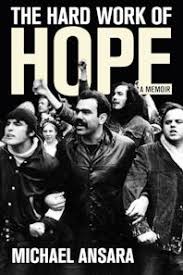
The Hard Work of Hope

Hands Across the Hills

The Hard Work of HopeBy: Michael Ansara (ILR Press, imprint of Cornell University Press, 2025)

A fascinating memoir of Ansara’s organizing days in the 1960s-70s—beginning in the civil rights movement, progressing to leadership roles in Students for a Democratic Society (SDS), and later as the Executive Director of Massachusetts Fair Share, an early attempt at a multi-issue, multiclass community coalition working both in neighborhoods and throughout the state for economic justice issues like utility rate reform, affordable housing, services for veterans, and more.

Although I’m a decade younger, it’s full of stories I can relate to: movements building and crashing, coalitions forming, working for unity against factionalist pressure, continually shifting definitions of the movement, issue and demographic intersectionality, right-wing pushback, our impatience when we’re young and our resistance to change as we age, the consequences of bad or absent strategy, the occasional miracles of luck plus hard work creating success, the need to celebrate even limited victories—I’ve lived all of that, though not as intensely as he did. For instance, I’ve never been attacked by cops; he was beaten many times and had guns put to his head by some of them.

It’s also a who’s who of the movement, full of people whose names I recognize, though I only knew one (Dave Dellinger) personally.

And it’s wonderfully full of chutzpah in the service of others: the willingness to break convention and do outrageous things that people don’t expect in order to achieve results that people think you can’t get.
Some of the tactics:

  • An impromptu one-to-one debate with then-Secretary of Defense Robert McNamara, both of them standing on top of a car in the midst of a big crowd of peace demonstrators (and some pro-war demonstrators), relaying audience questions to McNamara over a bullhorn (pp. 64-66)
  • Exposing a CIA money laundering campaign that funded right-wing front groups by closely examining tax returns—including parts he wasn’t supposed to be shown (p. 70)
  • Organizing a huge demonstration that physically blocked a recruiter from Dow Chemical (makers of Napalm) at Harvard from meeting with students—and collecting student IDs from so many participants AND nonparticipants to turn over to the administration that the school could not enforce it disciplinary code against those who put their bodies on the line (pp. 90-91)
  • Going to his military induction physical with a big pile of antiwar leaflets and distributing them to other potential draftees waiting for their physicals—and quoting the Constitution and the history of colonialization in Vietnam to the sergeant and then the colonel who tried to interfere (p. 142-143)
  • Getting inside information from a mobster who incriminated a vicious and corrupt judge (pp. 186-187); that judge was eventually disbarred and forced off the bench
  • Obtaining 300 shares of Boston Edison stock from a sympathetic wealthy person, distributing them to organizers and supporters, and essentially taking over a stockholders meeting —resulting in a freeze on electric rate increases (pp. 222-223)
  • Organizing a “one-peanut-per-plate” public protest outside a major fundraising dinner, pointing out that ordinary people couldn’t afford the price of admission to gain the access that lobbyists had (p. 229)
  • Learning, over time and across many campaigns, how to deeply listen even to those you disagree with, how to uncover common ground, how to create enough pressure that governments and institutions are willing to address your goals
  • As Executive Director for several years of the broad-based community organization Massachusetts Fair Share, building coalitions that included both Black inner-city activists and the white suburban women who had opposed school busing (a super-divisive issue in 1970s Boston that made national news for months), both veterans and peace activists, and several other pairings of opposites

Yes, I’m aware that the current administration loves to break rules. But they do it for personal gain of wealth and power. Ansara and his cohort did it to create a better world.

Ansara is more than willing to criticize his cohort’s actions and strategies. He takes responsibility again and again for things he would do differently now—from not alienating veterans by marching with National Liberation Front (Vietnam communist) flags to offering an alternative organizing model to the 1968 Democratic Convention protests that turned so ugly: pressuring the Democratic candidate, Hubert Humphrey, to come out against the war and then organizing enough support to defeat Nixon. Had that happened, he believes, we might have avoided not just Nixon but the worse administrations of Reagan and Trump (I would add George W. Bush).

Connect with Shel

Turn Your Sustainability/CSR Report Into Powerful Marketing!  http://goingbeyondsustainability.com/turn-that-nobody-reads-it-csr-report-into-a-marketing-win/

About Shel

Speaker, author, and consultant Shel Horowitz of GoingBeyondSustainabiity.com helps businesses find the sweet spot at the intersections of profitability with environmental and social good — creating and marketing profitable products and services that make a direct difference on problems like hunger, poverty, war, and catastrophic climate change. His 10th book is Guerrilla Marketing to Heal the World.

If you’re not already a subscriber, please visit http://goingbeyondsustainability.com and scroll to the very bottom left corner. You’ll find lots of interesting information on your way to the subscription form, too.

————–

Links in this newsletter may earn commissions. Please click here for our privacy and endorsement policy.


Powered by:

GetResponse

The Clean and Green Club, December 2025

<!doctype html>


Having trouble reading this as an email? Please visit thecleanandgreenclub.com to read it comfortably online.

Shel Horowitz’s Clean and Green Marketing Tip: December 2025

Great news! All of my eBooks with a publication date through 2023 are now free to subscribers to The Clean and Green Club (the monthly newsletter I’ve been publishing in some form all the way back to 1997).
Volunteer for Fishbowls
People making protest posters
Image: Andrea Piacquadio via Pexels 

I regularly attend several networking meetings over Zoom. At the UK-based Networking for Good one recent Monday, the first great thing that happened was a first-time attender, a video expert, giving us all permission not to obsess over ums and uhs when we speak or make a video. I’ve never liked the Toastmasters focus on that, and it’s one reason why I never joined. It’s a sign that we’re human, and even super-experienced professional speakers have them slip in.


Even better, they asked for a volunteer to have people ask anything they wanted about the volunteer’s business, and I eagerly waved my hand. And I’d urge you to wave your hand wildly when you’re offered a chance to be in a fishbowl, because there are so many benefits.


Yes, I recognize that many people are uncomfortable bringing attention to themselves or speaking to a group. While public speaking or going on TV is not scary for me (anymore), I frequently do things that
are out of my comfort zone. It’s one of the ways I continue to grow and learn. Two days before that meeting, I asked the protester standing next to me who was wearing a slogan that disturbed me deeply if he was open to discussing it. That was definitely out of my comfort zone, but we had a five-minute conversation where we disagreed but were both respectful and each brought some facts. So put your hand up anyway.

It won’t be as scary as that ?


To name a few, it’s:

  1. An opportunity to get consulting at no charge, as people brainstorm together to help you solve a problem
  2. A chance to see how others think, and figure out who in the group you might hire to go deeper on solving that problem (I’ve gotten many clients because people saw the value of advice I was giving without even charging)
  3. A fabulous way to let people know more about what you do without getting accused of being too salesy
  4. A chance to show off your problem-solving abilities to others, as I did here
  5. A market research bonanza, because you have no idea of what questions you’ll br asked—and those questions provide deep insight into the minds of your prospects
  6. And, of course, the challenge of spontaneously answering keeps your mind sharp and builds skills useful when you’re pitching clients, being interviewed in the media, or even being grilled by a government body with authority to grant or decline your permit. Plus, it’s fun.

I also think the session is worth sharing with you, because it shows a lot about how I see the world, and how I find possibilities to put it together differently—and also how I seized the opportunity to clear up misunderstandings (such as the ideas people had that my strategies were specific to my own country or were only relevant to large corporations. Actually, large corporations usually have in-house experts, and my client load is almost entirely micro-sized businesses and community groups.) You’ll also see my techniques for replying under pressure—such as when I began my answer with “Mm-hmm. Great question” or related my reaction when I was asked about what to do for a pizza shop. Those little fillers bought me the 5 or 10 seconds I needed to decide which case studies I would talk about or what solution I would offer that pizza shop.

Yeah, and I took that guy’s advice about leaving in most of the ums and uhs, which I do think adds a layer of authenticity ;-). Here’s the transcript, edited to remove names, clean up punctuation, etc.:


Q: How applicable are your methods beyond the lower 48?

A: Oh, totally. I’ve gotten clients in Australia, all across Asia and Europe, um, occasionally in Latin America. Basically, certain things don’t work, like if I’m talking about whatever government subsidies might be available, that’s not going to be relevant, but I almost never talk about that. It’s not my expertise, and I’m much more interested in the fundamental concepts. That, for example, when you build environmental and social good into your business, you are then able to project yourself as something different and better than your competitors. My favorite example is ice cream: Haagen-Dazs and Ben & Jerry’s are both worldwide companies. One is cold and corporate, I call it the Exxon of ice cream. And the other is warm and fuzzy, uh, with old bearded people on the labels, like me. And it has big commitments to social justice, to employing the so-called unemployable, to green energy. Which one are you going to take your $6 or your £4, um, and buy at the supermarket? It’s a very easy choice. The ice cream isn’t that different. So, you get more customers, you get less resistance from those customers, you might be able to charge a little more, will probably have better relationships with your neighbors, your competitors even, and yes, your government regulators who are in charge of you. So, my question is, why wouldn’t any company want to build this in?

Q: Oh, I was going to say, ask Shel what he wants, because I know he’s bringing a book out. So, this time next year, where do you want to be?
A: I want to have written the book, um, which means that I will have found a charity partner, and then found a publisher. The book is about being an activist when you’re old. And, so I—it takes me usually about 6 months to a year to write a book, so I hope to have it done and be into the marketing phase as the publisher is readying it for publication, which is also something that can take a year. I’m not self-publishing, and therefore I’m on somebody else’s timetable when I do it. But, uh, because it’s a relevant book right now in this country, I suspect they may put it on fast track. And my grandson will be 4 instead of 3, and I expect that he will still be delightful. That’s kind of what I want to be. And oh, yeah, I also want to be living in a democracy again by then, which involves not just me, but millions of other people to make that happen.

FOLLOW-UP Q: Well, by this time next year?

A: Yeah, why not? Just because his term won’t be over doesn’t mean that he has to have the power that we’ve given him. What has been given can be taken back. So he might still be president, but he might be unable to pass anything through Congress, for example, because all he needs is about 5 of his Republican buddies to jump ship, and he doesn’t have anybody to vote him anything anymore. It’s a very, very tight Senate and House.

Q: Shel, how does it apply to small… Um, interpret what they’re about. Like, small practice like mine?

A: Well, I’m a small practice like yours. I am a one-person business. I’ve never had an employee in 45 years in business, I have freelancers, and um, partners for various things, but I am as small as it’s possible to get. I don’t even have a separate office. I work out of my home. And these principles were adopted from my own career, so they are all extremely applicable. So, as, uh, going way, way back, about differentiation, when I started really focusing on resumes, which was 1984 or 85. I put a little ad in the Yellow Pages, a half-inch ad, that said, Affordable Professional Resumes While You Wait. Nobody else had a slogan like that. I started getting lots of clients. Just that simple a thing. It was, I don’t know, $50 a month or something like that to have that in. And back in those days, before everybody had their resumes written by an AI bot, it was very effective. And when I moved into business-to-business services, I was able to connect on various online communities that gave me as much reach within those communities as any big corporation would have. So, and then as I began to differentiate as the green and social conscious marketer, the people who were attracted to that would find me.

Q: And what’s your recommendation for the most effective marketing tool currently that you’ve…?

A: Well, it’s bespoke, so it’s going to depend on who you are and what you do, and what your interests are. Like, for example, I’ve got a client now whose socially conscious book should be coming out next year, finally. And, um, she is not a good candidate for radio and TV, because she’s a double-stroke survivor, she speaks slowly, and she thinks slowly. So normally that’s a great medium for somebody with a book like hers. It’s not going to work for her, I’m not going to suggest it. Uh, for her, we’re going to be courting print interviews. And her goal is not to sell a huge number of copies, and there’s also going to be some word of mouth in the communities where they believe in what she’s writing about. And it’s going to be very targeted and very cheap, actually, and paid advertising will not be a part of it. It almost never is for my clients. It’s the last thing I suggest in very few situations.

Q: So, Shel, what are some tangible impacts your business have done, maybe through your clients? Because I’m interested… because you have this, uh, amazing message to make, like, the world a better place. Um, are there any specific, kind of, examples of how you’ve made an impact?
A: Mm-hmm. Great question. So, I’ll just talk about some of the clients I’ve worked with. I had a guy who came to me with, uh, he owns a conference center, and it happens that 2 or 3 owners ago, that property was the birthplace of the safe energy movement in the United States. So I wrote him a marketing plan about attracting the kinds of events for whom the organizers would find themselves walking on sacred ground coming there. Like, you can be where in… not in the room where it’s happening, but in the room where it happened, 50 years ago, these were where these meetings were held. This is the commune where so many of the experts in the safe energy movement happened to be living at that time. And, um, I don’t think he would have ever thought of doing that on his own.

I had another client who has a cell phone sized solar lamp. And with her, I brainstormed a huge list of applications for it, ranging from disaster relief to night lights for kids. And, um, so I think I expanded her horizons about what’s possible.


And my favorite example is actually not a real client, but a radio interviewer once asked me, “well, this is all well and good for big corporations. What would you do for a pizza shop owner?” So, I said, hmm, nobody’s ever asked me that before, and on the spot, I came up with this idea that the pizza shop owner could go into a local inner-city low-income high school, recruit a few kids, teach them how to grow tomatoes and garlic and oregano, teach them how to make a pizza, and then teach them how to go into their schools on a Friday and say, okay, we’re taking orders for Monday delivery. Monday, in the U.S., is a dead day in the restaurant industry. Nobody goes out to eat, most restaurants are closed. So, this pizza shop owner is going to open on Mondays, make the exact number of pizzas that’s already ordered and prepaid. The kids are going to deliver them to their classmates and collect a little bit of the money. And basically, there are no losers in this except the school cafeteria…Yeah, and that was just on the fly that I came up with that.


Q: What are you the best at?

A: I think I’m really good at seeing the way things fit together in ways that other people don’t fit together, and how you can form partnerships, and how you can really just shift your thinking, like that pizza shop example. Um, that’s—I could immediately see the connection between making pizzas and helping low-income kids, uh, both with entrepreneurial skills and also with getting better food into their bellies. I think I’m really good at that, and I’m also a pretty darn good writer and communicator. I invented what I call the story behind the story press release, which is not the Who, What, Where, When, Why press release that we’re all taught to write. Uh, so instead of “electronic privacy expert releases new book,” when I had a client with a book on electronic privacy, my headline was, “It’s 10 o’clock. Do you know where your credit history is?” Yeah, so just reframing the whole thing, I’m very good at that. Where I’m lousy at is managing all the little details of a big project.

Discover why Chicken Soup’s Jack Canfield, futurist Seth Godin, and many others recommend Shel’s 10th book, Guerrilla Marketing to Heal the World (and download a free sampler). Autographed and inscribed copies available.
Marketer of the Day Interview
Robert Plank just released the interview he did with me for his Marketer of the Day podcast. We covered a lot of ground in just 30 minutes. A few of the highlights (you can read more in the extended summary on my interviews page):

  • One simple action any consumer of chocolate can do to better the world
  • How a very NON-tree-hugger company (you know their name) doubled the market for organic foods and personal care products by going way beyond the Whole Foods customer profile
  • The kind of lateral thinking I bring to my clients that creates value and opportunity by seeing possibilities that aren’t obvious but make perfect sense
  • Why I love engineers, with three examples of how they change the world
  • How to harness the savings from “low-hanging fruit” changes to create capital and momentum to take the next steps
  • Community-focused and eco-centric alternatives to Amazon and Google

https://www.robertplank.com/1476-guerrilla-marketing-heal-world-shel-horowitz/

Movie Reviews and More Podcast
We didn’t talk about movies, but Brian Sebastian interviewed me about activism on his Movie Reviews and More podcast. In just over 20 minutes, we discussed:
  • How activism in my teens turned me into a marketer (1:13)
  • How, in my 40s, starting the campaign that saved a mountain (1:30) led me back to the business world, with a new focus on profiting through environmental and social good (2:24)—and why, now, I’m swinging back to writing a how-to book for badass older activists (3:59)
  • How sometimes you find out what impact you had—but even when you don’t, you still have impact (6:10)
  • The lessons in humility I learned from Pete Seeger (8:34)
  • Who will inherit the Earth if we humans don’t get our act together (10:02)
  • Lessons I learned from my mom about confronting injustice even in your own family, and finding non-obvious ways to make a difference (10:12)—and from my dad about living your truth even when the world tells you differently (11:01)
  • How Trumpism may create opportunities for true progressive alternatives well beyond the centrism of mainstream Democrats—and how few people it can take to set deep change in motion (12:42)
  • How ordinary people have made big societal changes, over and over again—and why, more than ever before, we need to mobilize in opposition NOW (16:21)
  • The little thing I’ve done on Facebook for more than 2800 days in a row that empowers others and strengthens community (19:32)

https://www.youtube.com/watch?v=0BAJUcr-1cw 

East Trade Winds Networking Group
I’ll be giving a short 15-minute presentation in environmental and social good as a profit strategy for the East Trade Winds networking group on Tuesday, February 10, some time between 8-9 a.m. Eastern (5-6 a.m. PT). It’s free to register for the weekly calls; here’s the link.

View highlights from (and listen to) more than 30 podcasts ranging from 5 minutes to a full hour. Click here to see descriptions and replay links.

From Ellen Finkelstein:

A couple of friends have been frustrated by not seeing progressive politicians or well-known thought leaders offer positive ideas for improving life in the United States. So we decided to create a place for anyone to post ideas on a variety of topics, such as gun violence, healthcare, homelessness, poverty, immigration, and more. And we hope people who can implement them will notice. It’s a simple site but it works.

Please post your ideas here and then share the site! https://www.project2029.community

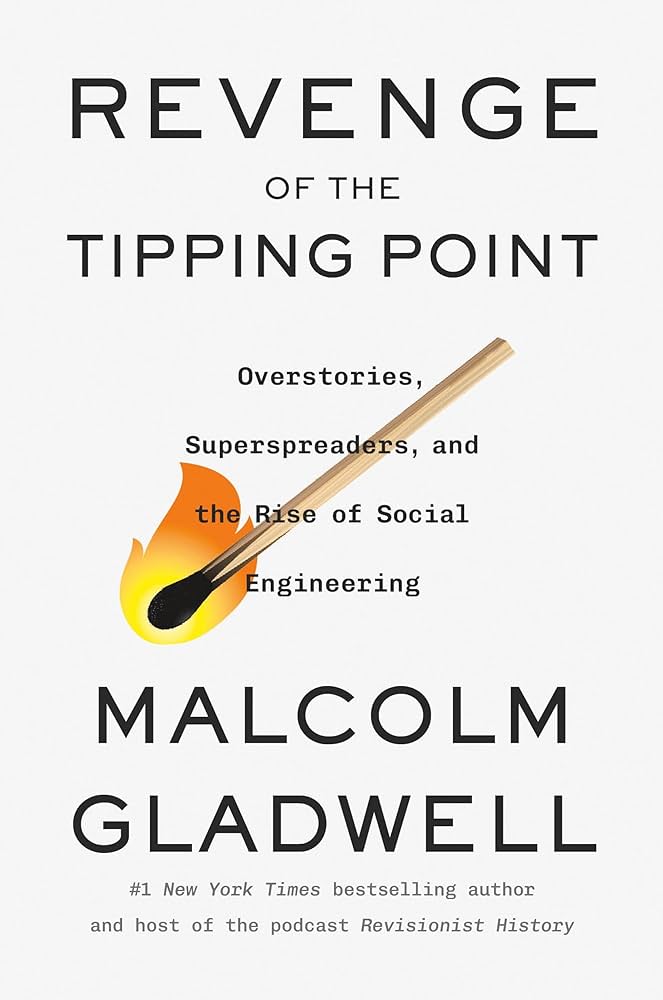
Revenge of the Tipping Point

Hands Across the Hills

Revenge of the Tipping Point
By: Malcolm Gladwell (Little, Brown and Company, 2024)

After reading at least three of his earlier books, I’m always impressed by Gladwell’s lateral thinking. Not uncritically; I’ve often found at least one set of conclusions that don’t match my reality—and I found one here, which I’ll bring up later. But he has a way of shaking up the mainstream view of the world with fresh thinking.


Maybe the best example is
David and Goliath, which I reviewed in April. Even in my four years as a yeshiva (Jewish day school) student, David was always presented as the extreme underdog, a young shepherd who risked all to challenge a bully. But as Gladwell convincingly argues, David was an elite fighter using the most powerful weapon of his day. Once he set the rules of engagement to play to his strengths and not the giant’s, he had pretty much already won.

But let’s get back to THIS book. A lot of what he covers is rooted in the idea that averages are often meaningless; it’s much more useful to look at what’s happening on the edges, the extremes. He begins and ends with the Sackler family, owners of Purdue Pharma, the manufacturer of OxyContin—the drug that turned opiate addiction into an epidemic with some 80,000 fatalities. Gladwell compares rates of overdoses by state and notices a pattern: states that required triplicate recording (and filing a copy with the state) of opiate prescriptions had far lower death rates than those that didn’t. While annoying to doctors, this simple rule meant that doctors were under state scrutiny and greatly decreased the incidence of frivolous opiate prescriptions. Thus, despite its much higher population, Illinois was far less hard-hit per capita than neighboring Indiana, which didn’t have that requirement (p. 266).


Purdue, under the advice of its well-paid consultants from McKinsey (pp. 285-291), quickly learned not even to bother with the triplicate states. Instead, they shifted their marketing to focus on those doctors already prescribing opiates much more often than most docs. Essentially, they were using the Pareto Principle (a.k.a. the 80/20 rule) to sift out the easiest doctors to woo—and, astoundingly, that fed a system where one percent of doctors wrote 49 percent of the opioid prescriptions, with “superspreader” docs prescribing them up to 1200 times more often (p. 294). For more on Pareto, please see
my review of Perry Marshall’s 80/20 Sales and Marketing (scroll down).

Opioids are only one paradigm in this book. Others include bank robberies, Medicare fraud in Miami, an elite public high school that developed a major suicide problem, a housing development that enforced racial integration through rigid quotas similar to those often used to keep people of color out, the shocking racist reasons why elite universities including Harvard have varsity programs in obscure sports like women’s rugby, an early (and famous) COVID superspreader event at a biotech conference in Boston, public awareness of the Holocaust, and the massive public shift on same-sex marriage and general acceptance of the LGB community (I’m deliberately not including the TQ we often see at the end, because it’s not clear to me that the same level of acceptance covers trans folks).


I don’t have space to discuss all of those, but let me touch on the last two.


Gladwell says the Holocaust jumped into mass consciousness quite late, following a 1978 TV series watched by about half the people in the US. He says that until 1984, the US had only ONE Holocaust museum, founded in Los Angeles in 1961, more than 15 years after the end of the war (p. 209). He cites several popular history textbooks by the likes of H. Stuart Hughes and the collaborations by Henry Steele Commager and Samuel Eliot Morison that gave the Holocaust just a few lines (p. 211).


True, many survivors didn’t want to talk about their experience, even with their children and grandchildren. But for me, growing up in heavily Jewish New York City in the 1960s and 70s, the Holocaust was omnipresent. We all knew someone whose parents or grandparents or aunts or uncles were survivors, and who had other relatives who were killed. As a grade-schooler, my wife (my age, also raised Jewish in NYC) played a schoolyard game called “Concentration Camp.” I had a good friend whose parents fled Eastern Europe for Cuba—and fled again to the US when Castro came to power. And I remember, long after I left yeshiva, watching a horrific film about the Holocaust, shown in my public high school, which I graduated from in 1973, five years before that TV series.


Also, Elie Wiesel published his first Holocaust memoir in 1955 and Anne Frank’s diary was published in 1947. These books sold quite a few copies. So my questions for Gladwell are 1) Why if this was so deeply ingrained in my subculture experience did it apparently make no impression on the wider culture “overstory” until the “miracle” of a just-three-networks TV culture made it possible to reach an entire country at once and made the Holocaust part of the everyday narrative and something to study? 2) Where are the blind spots in HIS research that made it look like interest in the Holocaust came up out of nowhere after that TV series?


One insight Gladwell shares about many tipping points is that even just before the tipping point is reached, change may seem relegated to the distant future. Just months before victory Lenin didn’t think he’d live to see the revolution (p. 236). Vaclav Havel saw Gorbachev’s visit to Prague not as the capitulation it was, but as the oppressor checking n on his colony (p. 235). So too with the incredible shift in LGB acceptance. As recently as 2004, George W. Bush was calling for a constitutional amendment to prohibit same-sex marriage nationally, and many conservative states adopted restrictions. But 2004 was also the year the Massachusetts Supreme Court legalized same-sex marriage in the state. Just 11 years later, the US Supreme Court, in
Obergefell v. Hodges, made it legal throughout the country.


For Gladwell, 25 percent is often the tipping point (p. 127, p. 255). Forces for change accumulate very slowly until that magic quarter, or sometimes magic third (pp. 121-124), is reached. And then society seems to change instantly—but years of work have gone into that “instant” transformation. I attended my first same-sex wedding ceremony (not a legal marriage back then, obviously) around 1979, more than 20 years before it became legal in Massachusetts and 35 before
Obergefell.


Despite its occasional flawed time frames, this book is definitely worth your time. The university athletics section alone should be required reading for any class on civil rights, racial justice, or academic elitism.

Connect with Shel

Turn Your Sustainability/CSR Report Into Powerful Marketing!  http://goingbeyondsustainability.com/turn-that-nobody-reads-it-csr-report-into-a-marketing-win/

About Shel

Speaker, author, and consultant Shel Horowitz of GoingBeyondSustainabiity.com helps businesses find the sweet spot at the intersections of profitability with environmental and social good — creating and marketing profitable products and services that make a direct difference on problems like hunger, poverty, war, and catastrophic climate change. His 10th book is Guerrilla Marketing to Heal the World.

If you’re not already a subscriber, please visit http://goingbeyondsustainability.com and scroll to the very bottom left corner. You’ll find lots of interesting information on your way to the subscription form, too.

————–

Links in this newsletter may earn commissions. Please click here for our privacy and endorsement policy.


Powered by:

GetResponse

The Clean and Green Club, November 2025

<!doctype html>


Having trouble reading this as an email? Please visit thecleanandgreenclub.com to read it comfortably online.

Shel Horowitz’s Clean and Green Marketing Tip: November 2025

Extra Bonus This Month

Don’t skip the “new on the blog” section if speaking is any part of your communications mix. I thought seriously about making “Possibly the Best Speech I’ve Ever Heard, On Any Topic” my main article, because it’s a learning tool for speakers, whether they share his viewpoints or not—but I put it on my blog because it was timely and I wanted people to see it while the event was fresh. Think of it as a bonus main article ;-).

Easy Levers to Create Change
People making protest posters
Image: Mikael Blomkvist via Pexels

As promised last month when we discussed
the pressure campaign that got
Jimmy Kimmell back on the air after just a week, here are five among many tools that we as individuals can use to influence current events. And, with enough participants, create change.

  • Use our buying power.  ABC’s parent company, Disney, lost $6.4 billion, with nearly $4 billion evaporating within 24 hours.
  • Express our opinions: write letters to elected officials, regulatory agencies, and the letters column of your local newspapers. If you have no time to write a letter, someone has probably put together a petition. And when singing petitions, if you have the option of editing, change the subject line and lead paragraph, at least, even if you borrow the rest of the form letter. Individualized letters are taken far more seriously, especially if you say something about how this personally affects you and your family, or your community.
  • Join public protests. No Kings Day on October 18 had more than 7 million participants, from a couple of dozen people on the greens of tiny little villages to hundreds of thousands gathering in megacities.
    Given that many people had to work, were too disabled to attend, were afraid to go because they are the “wrong” skin color and might get thrown in an ICE hellhole or deported, or were otherwise unwilling to join, we can pretty much guarantee that each of us who attended represented at least one who did not.And that’s significant because it puts us well above the 3.5 percent of population that researchers Erica Chenoweth and Maria Stephan have shown is enough to nonviolently destabilize (and often collapse) a repressive government. So if the movement needs a general strike at some point, it’s likely to have enormous impact. Think Arab Spring, the overthrow of apartheid in South Africa, the US Civil Rights and Vietnam peace movements, and dozens of other examples.
  • Influence people in the institutional pillars to resist. Chenoweth, Stephan, Daniel Hunter George Lakey, and other nonviolence scholars posit that the strength of a regime rests on pillars such as government agencies, media, academia, and of course, police and military. If members of those institutions begin to resist illegal or immoral orders, withdraw cooperation, and find ways to aid the resistance, that government might topple very quickly. That model ended the Soviet Union, a global superpower second only to the US at that time, about 40 years ago—and except for the execution of Romania’s president, did so almost entirely without violence.
  • Withdraw support. This involves not just the risky actions of refusing to pay taxes or refusing to serve in the army (or in the parts of the army that are enforcing a dictator’s wishes against a resistant population, as we’ve seen for decades in the Israeli soldiers who refuse to serve in the West Bank and Gaza). It also involves creating and patronizing alternative institutions to bypass the oppressive ones. For instance, shop at food co-ops and local farmers markets, bank at community credit unions, fund investment through crowdsourcing, bike or take public transit to work instead of driving.

Again, this is the tip of the iceberg. Gene Sharp listed 198 nonviolent tactics, back in the previous century. Several researchers have updated them for our times. Start with https://commonslibrary.org/198-nonviolent-methods-upgraded/ , https://nvdatabase.swarthmore.edu/category/gene-sharps-198/other , and https://www.nonviolenceinternational.net/nv_tactics_book (that last one includes more than 140 new tactics). Happy reading, happy action, and happy achievement of change”!

Discover why Chicken Soup’s Jack Canfield, futurist Seth Godin, and many others recommend Shel’s 10th book, Guerrilla Marketing to Heal the World (and download a free sampler). Autographed and inscribed copies available.
East Trade Winds Networking Group
I’ll be giving a short 15-minute presentation in environmental and social good as a profit strategy for the East Trade Winds networking group on Tuesday, February 10, some time between 8-9 a.m. Eastern (5-6 a.m. PT). It’s free to register for the weekly calls; here’s the link.

View highlights from (and listen to) more than 30 podcasts ranging from 5 minutes to a full hour. Click here to see descriptions and replay links.

From Ellen Finkelstein:

A couple of friends have been frustrated by not seeing progressive politicians or well-known thought leaders offer positive ideas for improving life in the United States. So we decided to create a place for anyone to post ideas on a variety of topics, such as gun violence, healthcare, homelessness, poverty, immigration, and more. And we hope people who can implement them will notice. It’s a simple site but it works.

Please post your ideas here and then share the site! https://www.project2029.community

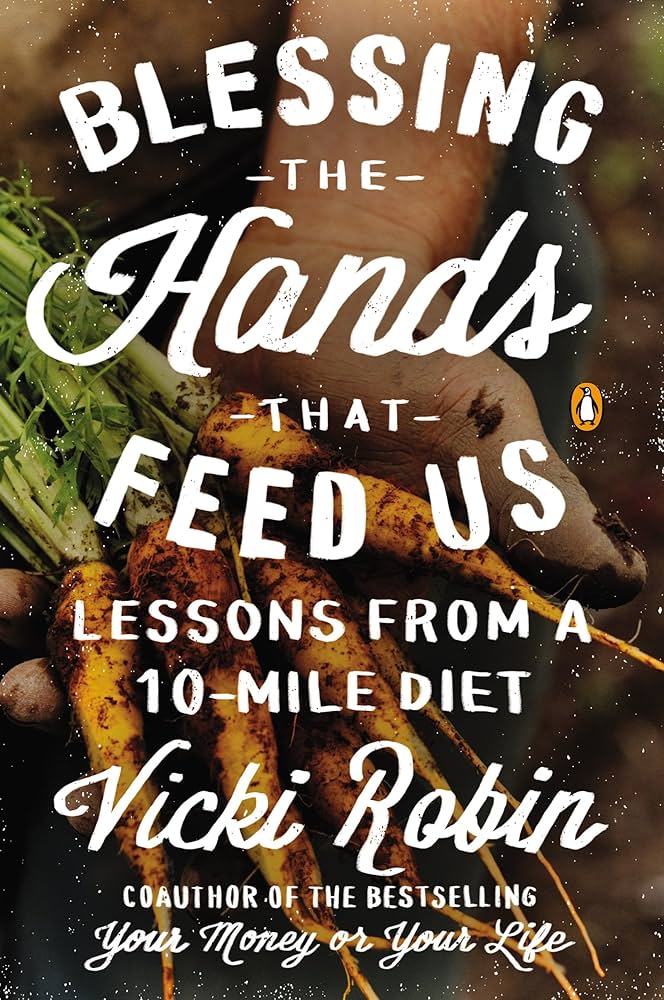
Blessing the Hands that Feed Us: Lessons from a 10-Mile Diet

Hands Across the Hills

Blessing the Hands that Feed Us: Lessons from a 10-Mile Diet
By Vicki Robin (Penguin, 2014)

Robin is the bestselling co-author of Your Money or Your Life (1992 )—which showed the world that sometimes, the big, fat paycheck in the corporate world was actually more expensive than the much smaller one for less prestigious jobs, once we subtract all the expensive trappings like fancy clothes, fancy house, fancy car—as well as the time and money costs of commuting, child care, etc.) and a well-known figure in people-centered economics. Decades later, she took on a new mission: understanding the food system, changing the way she eats, and helping others develop their own personalized ways to make similar changes.


First, she accepted a challenge from a local farmer to eat hyper-locally for a month: the “10-mile diet.” Succeeding with that during the abundant harvest month of September, she then challenged herself to see if she could get 50% of her food from a 50-mile radius—in the dead of winter (p. 155). And all along the way, from several months before the 10-mile experiment to years after her 50-mile February, she explores both her own relationships with eating, her body, and the place she’s chosen to live—and the wider social and economic issues of feeding her island, her region, and, spiraling out, the whole world.


This complex web of journeys surprises her in many ways—especially in the way “relational eating” turns out to be a powerful way to build community (p. 9 and throughout the book: “rather than feeling trapped, I felt held”, p. 199).


Robin had already been established on Whidby Island, Washington for quite a while and was active in the
Transition Towns movement there. But her exploration of local food took her well beyond TT’s potlucks. Using the same analysis skills in YMoYL, she started looking at what it would take for a community to be food-self-sufficient. She discovers why offerings from small, local organic farmers costs so much (pp. 156-157)—because of the many subsidies and unfair advantages industrial farming receives (p. 169), and because of certain obstacles put in the way of small farmers—such as needing to pay the same huge fees for organic certification but not having the economies of scale to amortize those costs over enough inventory to make it affordable (p. 211). She does recognize that industrial food from Big Ag plays important roles that small-scale local foods can’t, such as stocking food banks and other distributions to those without means and providing the convenience for those who don’t have the time or physical ability to focus on eating (pp. 169-173)—but her own eating patterns and her relationships with producers will never go back to her old ways that focused on food as fuel, obtained as cheaply as possible, eaten without much thought, and also without the extreme sensual pleasure that good local food often provides.

This book is personal for me. I decided to become a vegetarian at age 12 and carried out that decision four years later—after my mother extracted a promise to wait until I’d stopped growing. As this was before the Internet, I didn’t have the knowledge base to refute her. Ever since, I’ve been increasing the local (as well as the organic) components of my diet. Not counting restaurant meals or dining with friends who did the cooking, I probably source 95 percent of my vegetables and 50 percent of my fresh fruit from within 35 miles—with probably 80 percent of that 95 percent grown either at our organic CSA (Community Supported Agriculture) farm six miles (ten kilometers) away or in our own garden and most of the rest coming from either farmers markets or our food coop, which has many local farmers in its supplier network. Most of my dairy, beans, grains, seeds, and nuts come from much farther away, though. And I’ve wrestled with a lot of the same issues, especially since one of the four goals I build my speeches around is to see global hunger and poverty turned into abundance. (The others are turning othering into equity, war and violence into peace, and catastrophic climate change into planetary balance. Ambitious, I know—but also achievable.)


I took six pages of notes on this book. Here are a few more of my highlights where they first appear (many are repeated):

  • 18 questions to determine your unique relationship with food (pp. 22-23)
  • Why government subsidies of Big Ag make local food more expensive (p. 72)
  • 7 practices to increase your percentage of local food, including her own ten biggest factors in choosing food as well as ten main categories and a bunch of choices under each that you can sort through to determine where you will get your food (pp. 78-85)
  • How to learn (and modify) how you fit into your local food ecology (pp. 125-126)
  • The REAL (and not so economical) economics of fast food (pp. 134-137)
  • Understanding that when you travel, local is where you are, not just where you live (pp. 152-153)
  • The principle of subsidiarity (p. 191)
  • Receiving—and making—blessings (pp. 235-236) and hope (pp. 264-267)
  • How we can participate in rethinking and recreating a healthier ecology of food (Chapter 9)

Connect with Shel

Turn Your Sustainability/CSR Report Into Powerful Marketing!  http://goingbeyondsustainability.com/turn-that-nobody-reads-it-csr-report-into-a-marketing-win/

About Shel

Speaker, author, and consultant Shel Horowitz of GoingBeyondSustainabiity.com helps businesses find the sweet spot at the intersections of profitability with environmental and social good — creating and marketing profitable products and services that make a direct difference on problems like hunger, poverty, war, and catastrophic climate change. His 10th book is Guerrilla Marketing to Heal the World.

If you’re not already a subscriber, please visit http://goingbeyondsustainability.com and scroll to the very bottom left corner. You’ll find lots of interesting information on your way to the subscription form, too.

————–

Links in this newsletter may earn commissions. Please click here for our privacy and endorsement policy.


Powered by:

GetResponse

The Clean and Green Club, October 2025

<!doctype html>


Having trouble reading this as an email? Please visit thecleanandgreenclub.com to read it comfortably online.

Shel Horowitz’s Clean and Green Marketing Tip: October 2025

Never Forget that People Working Together Change the World: YOU Have Power Even When You Think You Don’t
People protesting in streets
Image: RDNE Stock project via Pexels

Comedian Jimmy Kimmell was taken off the air last month. The people of the United States got him back on, in just a week. Within that week,
ABC’s parent company, Disney, lost $6.4 billion, with nearly $4 billion evaporating within 24 hours.


I was one of thousands who
wrote a protest letter—where I noted (and supported with reference links) that only one word of his statement was even an opinion and the rest was documented fact. And although I’m not a regular Disney customer I was able to find a bit of economic leverage to use as well.


A housewife in Niagara Falls, NY became concerned about toxic dumping in her neighborhood, Love Canal. She organized her neighbors and, eventually, many other communities.
The Superfund toxic cleanup program, signed into law by President Jimmy Carter in 1980, was a direct result of her efforts. And Lois Gibbs went on to get McDonald’s to switch away from Styrofoam to paper and to get Target to steer clear of toys with PVC.


A developer announced a mountainside housing development planned to abut a much-loved adjacent mountain that’s a state park. After reading a bunch of prominent local environmentalists bemoan the project but say there was nothing we could do,
I personally founded the movement that defeated it in just over a year (this is an archived page; the website was taken down). Even I thought it would take five years. But we got thousands of people in and around our small town involved, passed three pieces of protective legislation, and then worked with the state to protect the land forever.


Around the world, for generation after generation, citizens have banded together to oppose and even overthrow repressive governments through nonviolence and noncooperation. Examples include South Africa, multiple countries in the Arab world (
Arab Spring), the former Soviet bloc, and Latin America.


While it’s true that there’s been significant backsliding away from democracy, notably in
Hungary and
Egypt, it’s also true that many of these revolutions overthrew entrenched and nasty governments that were not afraid to attack their own citizens.


All these movements—local or national, aiming for the stars or simply changing a local ordinance—started with one person who refused to take “nothing we can do” for an answer. As individuals, we often feel powerless—because acting alone, we can’t change much. But acting with others, we start movements that can get needed changes, even regime changes.


As businesspeople, we already have more influence than other citizens. Our actions also have more visibility—and, as Disney, Target, and many others are finding out, we are easier to hold accountable by the public. When a repressive government tells you to comply with its whims, don’t just say no. Tell your supporters, stakeholders, vendors, elected officials, etc. Remind your Board of Directors (if you have one) that enablers of totalitarianism are outed, boycotted, protested, shamed, etc. While risking the government’s wrath is scary, building support from the public dramatically lowers those risks and avoids the public backlash.


Next month, we’ll talk about some specific levers of change.

Discover why Chicken Soup’s Jack Canfield, futurist Seth Godin, and many others recommend Shel’s 10th book, Guerrilla Marketing to Heal the World (and download a free sampler). Autographed and inscribed copies available.
East Trade Winds Networking Group
I’ll be giving a short 15-minute presentation in environmental and social good as a profit strategy for the East Trade Winds networking group on Tuesday, February 10, some time between 8-9 a.m. Eastern (5-6 a.m. PT). It’s free to register for the weekly calls; here’s the link.

Freedom Over Forty Summit

Reclaim your life, rewrite your story, and create your own definition of success.
What You’ll Experience:

  • Health & Vitality – Feel better than ever in your 40s, 50s, and beyond.
  • Mindset & Purpose – Break free from restrictive patterns and embrace your true self.
  • Money & Freedom – Support your chosen life.
  • Relationships & Lifestyle – Surround yourself with people and activities that light you up.

Event Details:

View highlights from (and listen to) more than 30 podcasts ranging from 5 minutes to a full hour. Click here to see descriptions and replay links.

From Ellen Finkelstein:

A couple of friends have been frustrated by not seeing progressive politicians or well-known thought leaders offer positive ideas for improving life in the United States. So we decided to create a place for anyone to post ideas on a variety of topics, such as gun violence, healthcare, homelessness, poverty, immigration, and more. And we hope people who can implement them will notice. It’s a simple site but it works.

Please post your ideas here and then share the site! https://www.project2029.community

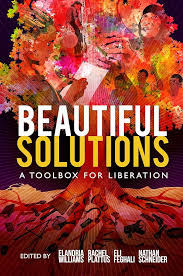
Beautiful Solutions: A Toolbox for Liberation

Hands Across the Hills

Beautiful Solutions: A Toolbox for Liberation

Edited by Elandria Williams, Rachel Plattus, Eli Feghali, and Nathan Schneider
(OR Books, 2024 under Creative Commons)

From 1968 to 1971, a guy named Stewart Brand published a series of Whole Earth Catalogs: resources to help people who were part of the back-to-the-land movement.
Beautiful Solutions switches the focus to activists, makes it global, and brings the concept forward to our own time.


The book makes no secret of its biases toward collectives and co-ops rather than corporate capitalism, toward factory and agricultural workers controlling their own destiny and their own working conditions rather than taking orders from some isolated executive, and toward collaborative, multidisciplinary/intersectional, egalitarian forms of decision making and shared responsibility rather than rigid hierarchies and departmental silos.


The book design and the organization of the text work together to keep things as accessible as possible. The material is divided into several overarching sections: Introduction; Food & Agriculture; Land & Housing; Education; Media & Information; Health, Art, Culture, & Spirit; Utilities & Energy; Manufacturing; Finance; Justice & Safety; Governance; and Outro (back matter), each with an introductory two pages addressing these questions: “What is at stake? What is possible? What could happen if we lose? What are some of the strongest forces against us? What are some of the most promising strategies? How are we making beautiful trouble? How can we heal? Who can we learn from?”


Each section is broken up into much smaller pieces, typically two to five pages, each labeled as a Story, Solution, Principle, or Question. Each acknowledges the people who wrote it—and also the mentors who showed the writers what they were doing and guided them to understanding—with brief blurbs. And each has at least one place to go to learn more: a website, a book, a film, etc. The layout is designed to scan easily and keep like concepts together.


Although right at the beginning, the book emphatically declares that it is NOT an encyclopedia, manual, or shortcut (p. 7), I’m calling it a resource manual. Here’s the mission statement/self-description:

Beautiful Solutions is a collaborative project that highlights many interlocking pieces of a complex puzzle. It helps us to see where pieces are missing and brings us closer to putting the whole thing together. By featuring examples from every area of our economy… Beautiful Solutions demonstrates that another world is under construction (p. 2).

The book aims to “Put you in charge…Give you the tools…Get you connected…Change the story” (each of these begins a descriptive paragraph, p. 5). And it recognizes that this journey has many paths. As an example, the first page in the first content section (food and agriculture, p. 29) jumps right in with eleven regenerative strategies before getting into specific projects.
You’ll meet dozens of people like:

  • Bren Smith, a fisherman who was wiped out by Hurricane Sandy, then launched Greenwave, a “regenerative ocean farming” experiment that has trained 8000 farmers to “grow only zero-input species that won’t swim away and don’t need to be fed.” That might include kelp, scallops, mussels, and oysters, among others (p. 40).
  • Rubin and Dawn Welesky, founders of Conflict Kitchen, a restaurant that rotates cuisines from various conflict zones around the world, thus de-demonizing so-called enemies (pp. 174-176); the restaurant even used online technology to join two sets of diners in Tehran and Pittsburg, cooking and eating the same meals at the same time.
  • Nancy Neamtan of Le Chantier de L’economie Sociale, a Quebec-based organization that promotes economic growth through federations of smaller businesses, rather than scaling up to a crushing corporate behemoth focused only on the single bottom line (p. 319).

And discover projects and concepts like: the solidarity economy (pp. 85-86); Berea College (Kentucky)—built on racial equality and low tuition made possible by student labor (pp. 91-94); La Coperacha, a Mexico-based cooperative of journalists doing deep reporting without the constraints of corporate or government media owners (pp. 126-129); a broad range of disability justice perspectives that includes less common, less visible issues like literacy (pp. 137-138), medication affordability through public ownership (pp. 144-147), and much more; a Philippine city that embraced zero-waste and lowered its costs from 70 mm to just 12 mm pesos per year (p. 208); a worker-owned sewing co-op that kept mills busy and mill workers employed during COVID, making masks and other protective equipment (p. 227); the restorative justice process that a hate-crime perpetrator and the community he attacked went through in New Zealand (pp. 276-277); a global citizen-participatory municipal budgeting process that began in Brazil (pp. 305-308)…

Connect with Shel

Turn Your Sustainability/CSR Report Into Powerful Marketing!  http://goingbeyondsustainability.com/turn-that-nobody-reads-it-csr-report-into-a-marketing-win/

About Shel

Speaker, author, and consultant Shel Horowitz of GoingBeyondSustainabiity.com helps businesses find the sweet spot at the intersections of profitability with environmental and social good — creating and marketing profitable products and services that make a direct difference on problems like hunger, poverty, war, and catastrophic climate change. His 10th book is Guerrilla Marketing to Heal the World.

If you’re not already a subscriber, please visit http://goingbeyondsustainability.com and scroll to the very bottom left corner. You’ll find lots of interesting information on your way to the subscription form, too.

Links in this newsletter may earn commissions. Please click here for our privacy and endorsement policy.


Powered by:

GetResponse

The Clean and Green Club, September 2025

<!doctype html>


Having trouble reading this as an email? Please visit thecleanandgreenclub.com to read it comfortably online.

Shel Horowitz’s Clean and Green Marketing Tip: September 2025

Marketing Lessons from an Indigenous Artist
Male and female workers at laptop

Back in 2007, passing through Ketchikan, Alaska, I stopped into a gallery filled with beautiful indigenous paintings and sculpture, including many large-scale pieces. Marvin Oliver, the artist and gallery owner, made me feel welcome and we had a nice chat.

Lesson #1: Make your prospects feel welcome, heard, and that they matter.

While I had neither the wall space nor the budget to buy one of those gorgeous full-scale pieces, he had several ways for me to take something home at a very affordable price: apparel, mugs, notecards, and small serigraph prints. At that time, I think his t-shirts were around $20. Pricy for a t-shirt, but very reasonable for a work of art that I could wear.

Lesson #2: Provide an Affordable Entry Point.

This, of course, is a variant on the well-known marketing funnel concept, where first you sell an inexpensive product or service to lots of people, then a somewhat more expensive offering to a more select group. Rinse and repeat until, at the top end, you might only sell a handful, but each of those clients is paying in the five or six figures.


Marvin didn’t really have a funnel, as far I could tell. He sold small things to impulse purchasers like me—and original paintings to those who not only would treasure them but who had substantial resources. They were two different markets that co-existed in a single retail space.


And he did one other smart thing: his design included his signature. So, after several years of constant use, when that shirt wore out, I popped his name into the Ecosia search engine (which is generally my first stop, because every search funds the planting of a tree). His gallery came right up—and I was able to order two more copies of the shirt (thus lowering the shipping cost per shirt).


This year, those two are faded and full of holes around the edge of the silkscreen design. So once again, I popped his name into Ecosia. He passed in 2019, but galleries in both Ketchikan and Seattle were easy to find. I ordered two more shirts from the Ketchikan shop. They’re up to $27.50 and that’s still well within my budget.


Lesson #3: Make it easy for people to find you.
 

I actually misread his name and searched for Marion Oliver. I came up with dozens of people who were not him. But then I changed the search to Marion Oliver Alaska indigenous artist and found him immediately. Including his name in the art was brilliant, but if you’re signing your work, make sure people can decipher it. Full disclosure: my own signature would never pass the legibility test. But I don’t inflict my horrible handwriting on other people. If I write a short note to a houseguest, I block print. I type or dictate anything longer.

Discover why Chicken Soup’s Jack Canfield, futurist Seth Godin, and many others recommend Shel’s 10th book, Guerrilla Marketing to Heal the World (and download a free sampler). Autographed and inscribed copies available.

Freedom Over Forty Summit

Reclaim your life, rewrite your story, and create your own definition of success.
What You’ll Experience:

  • Health & Vitality – Feel better than ever in your 40s, 50s, and beyond.
  • Mindset & Purpose – Break free from restrictive patterns and embrace your true self.
  • Money & Freedom – Support your chosen life.
  • Relationships & Lifestyle – Surround yourself with people and activities that light you up.

Event Details:

View highlights from (and listen to) more than 30 podcasts ranging from 5 minutes to a full hour. Click here to see descriptions and replay links.

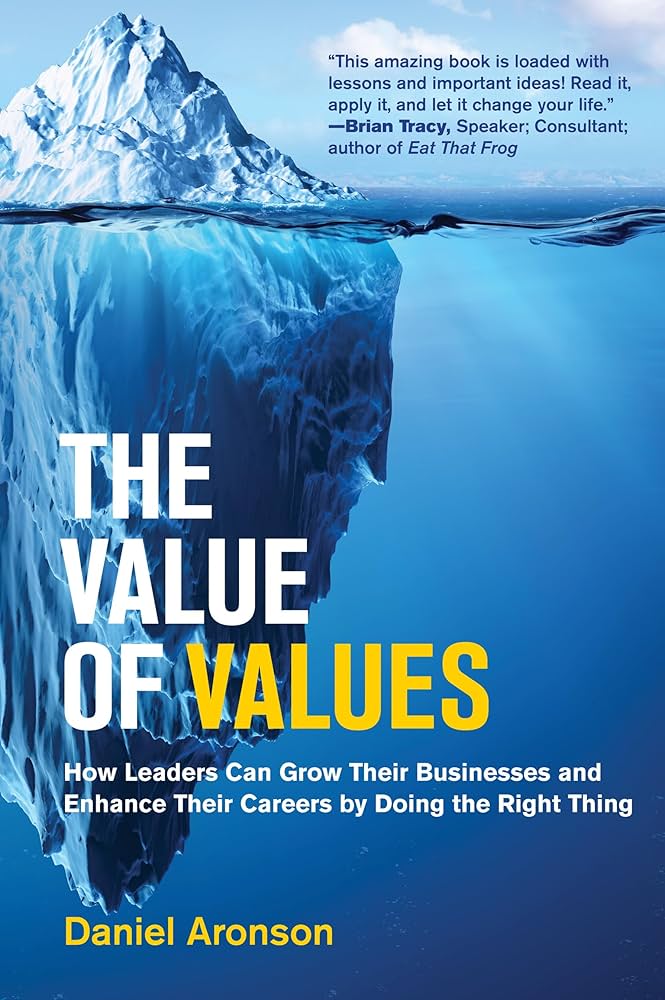
The Value of Values: How Leaders Can Grow Their Businesses and Enhance Their Careers by Doing the Right Thing

Hands Across the Hills

The Value of Values: How Leaders Can Grow Their Businesses and Enhance Their Careers by Doing the Right Thing 

By Daniel Aronson
 (MIT Press, 2024)

Of the many books on the business case for ethics, social justice, and green principles I’ve read and reviewed over the years, this is the first to reflect massive global changes over the past five years: COVID, the Black Lives Matter movement that gained prominence after the murder of George Floyd, accelerated climate change (p. 155) and—though the book predates the 2024 election—the growing authoritarian backlash. These system-wide seismic shifts interact with each other and can threaten the stability of companies that have not prepared (p. 175).


Aronson and his consulting firm, Valutus, have done massive work with major clients, and massive research on other success stories. In this rapidly changing world, he proves doing the right thing not only remains a business success strategy, it becomes crucial.


My most recent book, Guerrilla Marketing to Heal the World, is my fourth on that topic. It’s also well-researched (with over 400 reference citations), though I lacked the consulting base to fill the book with stories from my practice. But it was published in 2016. I’ve known it needed updating but haven’t been motivated to do the work (I’m working on a different book). So I’m delighted that Aronson validates the core principles of those four books:

  • Done right, initiatives that improve ecosystems, increase social justice, and decrease or mitigate destructive influences like hunger, poverty, war, racism/othering—and, of course, catastrophic climate change—can be highly profitable. They enable massive cost reductions and major revenue improvement. Lowering costs while boosting revenues = more profit.
  • Beyond the obvious dollars-and-cents direct impact, many other benefits ensue. To name three: more loyal and productive employees who stay longer and do more; happier clients/customers becoming unpaid ambassadors; easier interactions with regulators. While I discuss these in my book, Aronson has found ways to quantify them—and the positive financial impact can be enormous. Example: 3M’s Pollution Prevention Pays program not only blocked 3bn pounds of pollution but saved $2bn (p. 71).
  • Factors in the previous bullet generate a positive reputation that compounds those benefits; ignoring them causes “severe reputational risk” (p. 206).

Aside from the final ten pages, Aronson doesn’t talk much about positive publicity and marketing, which I cover in detail in GMHW. Publicity amplifies all those reputational benefits.

I took more than ten pages of notes. A few of the highlights:

  • Competitors pay (in lost business diverted to you) for your values-based improvements (p. 10)—and thus, if you DON’T build in values—or don’t work to maintain your values leadership as others start emulating and exceeding—it will cost you business (pp. 45-49, 122).
  • Waste reduction yields five additional benefits that multiply the savings in ways we usually don’t even think about—such the fuel saved in not heating and cooling a warehouse you no longer need (p. 14) or using water that’s already the right temperature instead of heating some water while cooling other water—which helped save IBM $3.6mm per year, returning $4 for each dollar saved on its water bill (pp. 73-74).
  • 82 percent of consumers have taken active steps to support a values-aligned company; 76 percent will tell others—and an astonishing 73 percent will take the risk to defend that company against negative accusations (p. 36).
  • Diverse workplaces (by culture, economic class, race/ethnicity, sexual orientation, age, gender, etc.) dramatically cut costs in several ways, from direct cost reduction to easier recruitment and retention to better price-earnings ratios to vastly higher productivity (pp. 75-77, 83-87, 179-208).
  • By constraining choices, values encourage innovation (p. 79).
  • Language influences outcomes: inclusive, team-building language like “we support” outperforms excluding language like “we oppose” (p. 119).
  • While it may seem unintuitive, values-centered companies did well during the pandemic because…
    1) more people considered values in their purchasing decisions—and this shift is likely to last (pp. 124-125), in part due to climate awareness (pp. 132-133);
    2) purpose-driven companies listen for early warnings of environmental and social crises, so they have more time to plan healthy responses (p. 138).
  • Rather than simply add new, values-based products, replace the anti-values products to keep your expenses consistent [and, I would add, strengthen your values proposition and your credibility with consumers and other stakeholders who demand consistency] (p. 151).
  • Long-term customer retention is easier for committed companies—and if customers see themselves as long-term, they’ll put in the time and resources to use your products more effectively, becoming happier and more likely to recommend you (p. 198).
  • Stick to your principles. Sincerity matters. You can gain support from people who disagree with you and respect your stand, as Tim Kaine did in his successful race for Virginia Governor (pp. 224-225). But if you talk the talk but don’t walk the walk, you’ll face greenwashing/purposewashing accusations and won’t reap the benefits (pp. 208-230).
  • Finally, tell others what you’re doing and why (pp. 230-239).

Connect with Shel

Turn Your Sustainability/CSR Report Into Powerful Marketing!  http://goingbeyondsustainability.com/turn-that-nobody-reads-it-csr-report-into-a-marketing-win/

About Shel

Speaker, author, and consultant Shel Horowitz of GoingBeyondSustainabiity.com helps businesses find the sweet spot at the intersections of profitability with environmental and social good — creating and marketing profitable products and services that make a direct difference on problems like hunger, poverty, war, and catastrophic climate change. His 10th book is Guerrilla Marketing to Heal the World.

If you’re not already a subscriber, please visit http://goingbeyondsustainability.com and scroll to the very bottom left corner. You’ll find lots of interesting information on your way to the subscription form, too.

Links in this newsletter may earn commissions. Please click here for our privacy and endorsement policy.


Powered by:

GetResponse

The Clean and Green Club, August 2025

<!doctype html>


Having trouble reading this as an email? Please visit thecleanandgreenclub.com to read it comfortably online.

Shel Horowitz’s Clean and Green Marketing Tip: August 2025

Do You Deal with International Payments?
When I hired my current assistant more than a year and a half ago, she told me about WISE, the best international payment service I’ve used. Fees are quite reasonable. And it only takes a few seconds to make the transfer. It’s been a lot more trouble-free than other, more well-known services. Use my link, https://wise.com/invite/dic/shelalanh and try it out with a no-fee transfer up to $600. I will receive a small credit.
Due Diligence and Deep Fakes, Part 2
Male and female workers at laptop
Photo Credit: Tima Miroshnichenko via Pexels

Last month,
I invited you to send your thoughts on how, both as marketers and as consumers, manipulative deepfakes affect us. With just one exception, you didn’t rise to the challenge.


This is the only response I got: “Not being a marketer, I can’t respond from that perspective, but this is chilling because if done a bit less clumsy, it could slide by as ‘reality’ all too easily. Deepfakes for sure.”


I’ll still share my own reactions, written June 22 (the same day I watched the video and wrote last month’s main article). But first—if this newsletter matters to you, please take a moment as you’re reading this—don’t put it aside until later—and hit reply and give me a couple of sentences that let me know why this work matters to you. Frankly, I need a pep talk. This newsletter is a lot of work to put together every month. I’m willing to do it if I know that people value it. Not so much if it’s going to a black hole.


Also,
if you found this issue in your spam or promotions folder, please take a moment to flag it as not spam and move it into your regular inbox (be sure when you move it that you tick the option to do this for all mail from this sender). That way, you’re more likely to see future issues.

My Analysis of the Deepfake

  1. Despite its errors and omissions, this was really well done for its purpose. If the goal was to grab us by our hearts, it succeeded. If the goal was to go viral, that succeeded as well. A TikTok version garnered 71,700 views in four days before being taken down. The first version I saw had 83,000 views. With dozens of versions on YouTube, other social media, and individual blogs, it’s likely that it’s been shared a whole lot. Probably several million people have seen it.
  2. As consumers, we must up our skepticism. I generally try to verify anything that seems too outrageous to be true before sharing it, though I forget sometimes (and often regret that I didn’t check). Before sharing anything provocative, make sure it’s true—especially if there are warning signs like a lack of sourcing or sourcing only to personal blogs or nonverified media such as Daily Kos on the left or Fox on the right—misidentifications, lots of emotion-pullers like “nobody ever expected,” clickbait headlines, etc., as there were all through this beautiful but false narrative.
  3. Ask yourself who benefits from the message and what’s their agenda. In this case, anyone who is appalled by the current administration’s racism is likely to be already angry and probably has mobilized to participate in demonstrations, sign petitions, write letters, lobby their elected officials, etc. So while this new, artificial, “example” of racism might turn the intensity up a notch, it wouldn’t really change anything. There are certainly people around the world who would benefit from de-escalation of tensions, and we’d all benefit if world leaders responded from the place of truth and love that the African leader’s doppelganger purported to respond from. When I watched an actual speech of his (as opposed to the AI-generated narrative of a fictional incident), I did notice that he has formed alliances with Russia. So it’s possible that the maker’s agenda was to very indirectly make Russia look better in the eyes of a world that distrusts and fears it (with reason—just ask Ukrainians or the loved ones of those murdered by its government). But the connection is thin enough that my own hypothesis doesn’t convince me. I still don’t understand what benefits the maker and distributors of this piece received.
  4. As marketers, we will face either extreme gullibility—that, if we can consider ourselves ethical, we have to refrain from abusing—or even deeper mistrust because “you can’t believe anything you hear anymore.” Either way, our task has become harder. So do what you can to enhance credibility.
    Examples:
  • Attribute testimonials by name, position, and geographic location, and ideally use video as well as text (please get permission first!).
  • Link to reviews including some negative ones. Refute any errors of fact in the negative AND the positive reviews, but do it with respect and politeness, not with name-calling or other accusations. Accept any genuine criticism and respond with how you plan to fix that problem or why it’s not something you’re able to fix (perhaps it’s a feature that you see as an advantage—explain how).
  • Set up user communities where your customers can get support from each other and explore new uses for what you sell.
  • Provide lots of unbiased information that positions you as an expert and your organization as on the user’s side, even if the right decision is for them to go elsewhere this time. And not in a begrudging way but from sincere wishes to be helpful, useful, and positively remembered.

Music to Make “Good Trouble” By: Songs to Inspire ActivistsMore than 50 songs to inspire social justice and environmental good organized into categories. I’ve been working on this for a few months—and I think it’s a tremendous resource for activists. Please share widely.

Discover why Chicken Soup’s Jack Canfield, futurist Seth Godin, and many others recommend Shel’s 10th book, Guerrilla Marketing to Heal the World (and download a free sampler). Autographed and inscribed copies available.
View highlights from (and listen to) more than 30 podcasts ranging from 5 minutes to a full hour. Click here to see descriptions and replay links.

One Million Rising

Hands Across the Hills
Photo Credit: Artem Podrez via Pexels

Two giants of nonviolence theory and practice, Daniel Hunter and Maria Stephan, were the lead trainers in a series of three mass calls co-sponsored by multiple peace, environmental, and social justice organizations, including Indivisible and nokings.org. After my notes on why you should listen to these calls, I include the replay and slide deck links for the first two calls and the registration link for the final one, which is this coming Wednesday.

I’ve been studying nonviolence for a long time. I found the two calls I attended so far to present the material in a concise and approachable way, with plenty of slides to help absorb the material.


Their message is that authoritarian regimes, such as the one attempting to cement its power in the US this year, require consent from us, the governed. And organizing to undermine that consent, in every sector, is some of the most effective work we can do to restore a government of, for, and by the people. When the pillars propping up a rogue regime are weakened or even fall, that government is statistically likely to topple.


In fact, according to researcher Erica Chenoweth (a close associate of Hunter and Stephan), if just 3.5 percent of the population actively stops cooperating, most governments have fallen. Chenoweth originally thought that violent revolutions were more likely to succeed, but as she got into the material, she realized that nonviolent social change not only wildly outperforms violence—but the effects last longer and the new governments are more responsive and less dictatorial than those installed by violence. This is glossed over somewhat in the calls, but I’m familiar with the literature and heard Stephan speak on this several years ago.


Back to the calls: Encouraging the withdrawal of consent and cooperation is the path they see (and one of the paths I see) to:

  • Stop the gratuitous cruelty (e.g., brutal, violent family separations)
  • Reclaim the economy that’s under siege
  • De-weaponize the major government departments that have been turned into servants of one man
  • Restore the roles of science, education, law, academia, culture, environmental and social justice work both within and outside government
  • Create and strengthen safeguards against the massive financial and political corruption
  • Rebuild the shattered trust not only that most of us in the US had in our own government, but that other governments and negotiating partners had as well.

Governments get shaky when bureaucrats refuse to comply with directives, when masses of people refuse to pay taxes or serve in the military, when soldiers disobey orders to fire on nonviolent civilians—and when institutions, whether the L.A. Dodgers or Harvard University, refuse to comply with power grabs and financial demands.

Links to the Replays and Slide Decks for the First Two Calls and to Register for the Final Call on Wednesday:

Session 1 (July 16, 2025) Replay
Session 2 (July 30, 2025) Replay
Session 2 slides
Register for Session 3 (Wednesday, August 13, at 8 p.m. Eastern/5 p.m. Pacific).

Connect with Shel

Turn Your Sustainability/CSR Report Into Powerful Marketing!  http://goingbeyondsustainability.com/turn-that-nobody-reads-it-csr-report-into-a-marketing-win/

About Shel

Speaker, author, and consultant Shel Horowitz of GoingBeyondSustainabiity.com helps businesses find the sweet spot at the intersections of profitability with environmental and social good — creating and marketing profitable products and services that make a direct difference on problems like hunger, poverty, war, and catastrophic climate change. His 10th book is Guerrilla Marketing to Heal the World.

If you’re not already a subscriber, please visit http://goingbeyondsustainability.com and scroll to the very bottom left corner. You’ll find lots of interesting information on your way to the subscription form, too.

Links in this newsletter may earn commissions. Please click here for our privacy and endorsement policy.


Powered by:

GetResponse

Clean and Green Club, July 2025

<!doctype html>


Having trouble reading this as an email? Please visit thecleanandgreenclub.com to read it comfortably online.

Shel Horowitz’s Clean and Green Marketing Tip: July 2025

Due Dilligence, Deepfakes, Gullibility—and What it All Means for Marketers
Photo Credit: This Is Engineering via Pexels

Sunday morning, June 22, I sat down at the computer and glanced at the list of suggested next plays after the YouTube video I’d watched the previous evening. One caught my eye: a major figure in the White House had told the Black leader of an African country, “sit down, boy” during a debate on national US TV. That level of blatant racism is shocking even from this openly racist administration, so I clicked through.

The story was a riveting description of the African leader’s supreme grace under pressure, responding passionately and from the heart in a way that broke down barriers, declaring the humanity not just of himself but of everyone in his country and continent, and then several members of the audience (including one identified by name and position) jumping in to thank him.

It was a beautiful piece of writing. I often multitask while listening to videos but I gave it my full attention, even though the obviously AI-generated narration (a smooth and comforting male voice) mispronounced words, paused in the wrong places, and such—and even though the White House personality was not identified by current title but as a “former political spokesperson.” That made me wonder if this incident was from before January 20, 2025 when T took office—and if that were true, why hadn’t I heard about it before? I also noticed that the video used still pictures of the two figures that were obviously taken in different locations. There were a number of other caution flags.

What I found really odd, though, was that not only was the TV show not named, there was no link to the actual clip. More than the narration errors and script glitches, that made me wonder if this incident actually happened. Still, the video brought tears to my eyes.


Hoping it WAS real, I went looking for it. First, I searched for the White House staffer’s name plus “sit down boy”. (I am deliberately putting the period outside the closing quote mark, UK-style, to make it clear that the period was not part of the search.) That brought dozens of results, all using variations of the same script—but with several different narrators and different pictures of the two principals. I also found a recent and powerful speech by the African leader, attacking Western imperialism (including when it’s disguised as charity) and Western hypocrisy, which I watched. This seemed like a very different personality than the one in the first video. But I didn’t find the actual TV show. Hmmm.

My next step was to add the word “broadcast” to my search string. Most of the page 1 results were the same ones again—but there was also one from the fact-checking site Snopes. By this point, I wasn’t surprised to discover that there is no evidence these two people ever appeared in the same studio at the same time.

Implications for Marketers: What Do YOU Think?

You’ll read my thoughts about what this sort of thing means for marketers in Part 2, next month. But I want to hear your thoughts as well. Please hit reply (don’t change the subject line), tell me how this scenario affects your thinking about marketing (as a marketer and/or as a consumer), and let me know if I can attribute your quote by name and/or title. Please do it while you’re thinking about it. I will accept comments through August 1.

Discover why Chicken Soup’s Jack Canfield, futurist Seth Godin, and many others recommend Shel’s 10th book, Guerrilla Marketing to Heal the World (and download a free sampler). Autographed and inscribed copies available.

Cliff McCarthy and I, both of us members of Clamshell Alliance since the 1970s and the newly formed statewide Commonwealth Commonwealth Coalition for Democracy and Safe Energy were interviewed by Glen Ayers and D.O. Ogden of Cliff and Shel on the MA governor’s attack on a 1982 citizen referendum passed into law by more than 2/3 of voters on Valley Free Radio’s Enviro Show. Cliff was one of the key organizers for that referendum: https://rss.com/podcasts/enviroshow/2103435/ 

My press release about this new coalition was picked up by at least two papers (before the group had a name): https://www.gazettenet.com/Local-advocates-push-back-against-Gov-s-nuclear-energy-repeal-62165076

View highlights from (and listen to) more than 30 podcasts ranging from 5 minutes to a full hour. Click here to see descriptions and replay links.

Hands Across the Hills: A Grassroots Project to Bridge America’s Political Divide, Letcher County, Kentucky & Leverett, Massachusetts 2017-2023

Hands Across the Hills

Hands Across the Hills: A Grassroots Project to Bridge America’s Political Divide, Letcher County, Kentucky & Leverett, Massachusetts 2017-2023

This remarkable book came out of an even more remarkable four-year dialogue project between residents of a county that voted overwhelmingly for Trump and a small town that voted overwhelmingly for Clinton in 2017. Unfortunately, they only printed enough copies to fill the advance orders—but fortunately, it’s available as a no-charge e-book.

Talking to the other side has never been easy, and it’s even less so in the highly polarized climate driven by social media and conventional media that value clicks and sensationalism more than they value truth, communication, or working together to 1) find common ground, then 2) organize toward common goals. Yet if we only talk within our own bubbles, all we do is reinforce othering and dehumanize the other side. Real peace is always through dialogue and often through some sort of reconciliation process. That’s how it happened in Ireland/Northern Ireland, South Africa, Sierra Leone, many countries in Latin America…and if there’s any hope for Middle East peace, they will have to talk and listen to each other a whole lot.

Hands Across the Hills (HATH) was an organization that attempted to humanize opponents and replace othering with understanding. HATH (the book) is about that common ground. Working not only across political differences but from very different cultures, education levels and economic classes (and with vastlty different generational traumas), these folks built trust in a multi-year process that involved alternating delegations. Kentuckians came to Leverett. Then Leverett residents visited Kentucky. And then the Kentucky folks made a return trip. COVID forced cancellation of a planned second visit to Kentucky, but the groups stayed in touch over Zoom. A business in Letcher County took its name from a café in Amherst, the bigger college town that borders Leverett. Leverett people were crucial in pitching in when their Kentucky comrades were hit with epic flooding.

A lot of attention went into designing and facilitating the encounters. Leverett resident Paula Green, who had done peace building and de-escalation in war zones from Bosnia to Rwanda, and Ben Fink, director of a network of community institutions in Letcher County, took primary responsibility to make sure the gatherings were safe, nonjudgmental, able to discuss hard issues—not to convince anyone but to understand the other perspectives—and included a wide range of fellowship enhancers from homestays to shared community meals to sightseeing, above and beyond the fellowship that was already building from the formal sharing circles and discussions.

Beginning with how the organization and the program were conceived and some of the early successes, the book also faces the hard truths that some things could have been better. While each group had read materials and watched videos to get a sense of the other culture—and to inoculate against the fear of being seen as hostile outsiders—there was too little preparation for the differences between working-class coal-mining families living in very basic housing and the largely upper-middle-class academic families of prosperous Leverett (pp. 8, 120-122). Both communities took some heat for failing to reach out to those who think differently in their own community (pp. 125-128). The Leverett group had tried earlier to set up dialogue with local Trumpers but were repeatedly rebuffed.

The Letcher County delegation skewed heavily toward Appalachians of Scottish-Irish ancestry, many generations removed from the immigrant experience. Though both communities were almost entirely White, Leverett’s group was more multicultural, and included several Jews who had family that either fled or were caught in the Holocaust. For some in the Kentucky group, these were the first Jews and the first children of immigrants they’d met. Many of the Leverett people were back-to-the-landers from more urban backgrounds, while the Kentuckians had been on their land for generations.

And yet they were able to discover many commonalities. Both lived in mountainous rural areas, both valued the land and their community intensely, both had similar forms of traditional music and dance. New Englanders’ beloved contra dances include many of the same moves as Appalachians’ equally beloved square dances, just done in two lines rather than squares. From either culture, those dances are likely to be powered by a live band with fiddle, banjo, mandolin, and other acoustic instruments.

And both groups ultimately wanted the same things: strong families, decent work, being valued for who each person is. The differences surfaced in the paths to implement those values. For instance, the Kentucky folks felt universal gun ownership was a way to keep safe, which appalled the Massachusetts group (p. 89). But then they dug a bit deeper to find out why. In Leverett, if someone calls the police, an officer will show up right away. In Letcher County, it could take 30 to 60 minutes to navigate the rough roads across sparsely populated areas. So even “sweet little old ladies” (p. 90), have to take primary responsibility for their own protection (p. 91).

HATH gained both local and national media attention and was successful enough so that organizers in both communities began to train other people to facilitate these types of dialogue groups and story circles, create these kinds of theater experiences, and create strong community networks within and across geography. And one of the most interesting and powerful sections of the book is a 30-page section of Appendix I that contains a thorough organizing manual (pp. 169-198), with major sections on fostering dialogue, cultural organizing, and communication. This would be useful to organizers in many issue-focused campaigns as well.

Connect with Shel

Turn Your Sustainability/CSR Report Into Powerful Marketing!  http://goingbeyondsustainability.com/turn-that-nobody-reads-it-csr-report-into-a-marketing-win/

About Shel

Speaker, author, and consultant Shel Horowitz of GoingBeyondSustainabiity.com helps businesses find the sweet spot at the intersections of profitability with environmental and social good — creating and marketing profitable products and services that make a direct difference on problems like hunger, poverty, war, and catastrophic climate change. His 10th book is Guerrilla Marketing to Heal the World.

If you’re not already a subscriber, please visit http://goingbeyondsustainability.com and scroll to the very bottom left corner. You’ll find lots of interesting information on your way to the subscription form, too.

————–

Links in this newsletter may earn commissions. Please click here for our privacy and endorsement policy.


Powered by:

GetResponse

Clean and Green Club, June 2025

<!doctype html>


Having trouble reading this as an email? Please visit thecleanandgreenclub.com to read it comfortably online.

Shel Horowitz’s Clean and Green Marketing Tip: June 2025

Do you need to pay or get paid from people in other countries? I’ve been using Wise for about a year and a half. It’s easy, quick, and so far has been completely reliable. They are offering a no-fee introductory special if you use this link and don’t spend more than $600 in the transaction. DISCLOSURE: I will receive a credit if you sign up through me—but I would not recommend them if I were dissatisfied.
How We Can Harness More of Our Own Brain Power to Get Better Results From Other Humans and From Machines
Photo Credit: Google DeepMind via Pexels

We’ve all heard that most of us humans only use a tiny fraction of our brain power. The figure of 10% is often bandied about.
While typically, we use quite a bit more than 10%, we also use nowhere near 100%. But of course, our brains are often busy making sense of information supplied by outside factors: people, other living things, new environments, things we’ve read, watched, or listened to—and, especially in the last few years, artificial intelligence.

So here’s a big insight: when we can harness information from those outside stimuli more effectively, we boost our own processing and our understanding of the world.

This insight came to me while reading a fascinating article (don’t be put off by its awkward title) by Christopher S. Penn, “How to Use Generative AI to Pivot Your Career.” Penn is a master of extracting far more utility out of AI tools such as Chat GPT and Claude than most of us have done. His secret? Using extremely carefully crafted and very involved search queries.

I’ll give an example in a moment.


But first, let’s think about something simpler: search engines. Many people have discovered over the years that the more specific the query, the more useful the results. So if you try a search query of only one or two words, you’re likely to get a lot of useless results and have to sift through to find the good ones. But a longer query will often take you right to your goal.


Say, for instance, you’re walking the neighborhoods of a city you don’t know well and you want to relax with a cup of organic coffee. If you just search Ecosia, Google, Bing, etc. for “organic coffee,” you’ll get dozens of listings showing where to buy beans online. You might see some nearby cafes listed but they won’t be easy to find in the clutter, including cafes on the other side of the country. But change the query to “organic coffee near me eat-in,” and you’ll probably see several good choices directly after the sponsored results.


It may be useful to think of AI tools as supercharged search engines that may or may not tell the truth. Because they are more complex, their instruction sets benefit from being more complex. Thus, the first of several AI prompts Penn uses to get his desired result is 400 words long. You can get to it easily by doing a command-F (Mac)/control-F (PC) on the article for “You are a world-renowned psychologist.”


Let’s look more specifically at this prompt, in the order these appear:

  1. “You are a world-renowned psychologist, a leading expert in personality science.” He gives the tool an instruction to treat itself as a knowledgeable expert—a great, easy hack to up the quality of results.
  2. “Your primary function is to analyze textual input and produce a comprehensive Big 5 Personality Analysis.” Further refining the expertise and presetting the AI to deliver an analysis of the five traits his model uses.
  3. “Your analysis must be objective, precise, detailed, and strictly based on the content of the provided text.” The machine is not allowed to bring in outside sources, only the documents that Penn provides. (He explains why he’s using these particular inputs.)
  4. “Assign a numerical score on a scale of 0 to 100, where 0 indicates a very low presence of the trait and 100 indicates a very high presence of the trait as inferred from the text.” Penn is creating an objective measurement system and eliminating any ambiguity about which way the numbers run.
  5. “[P]rovide a thorough analysis explaining your reasoning for that score. This explanation must:
    Be precise, objective, and detailed.
    Cite specific examples, phrases, themes, or linguistic cues from the provided text as evidence to support your assessment.” The machine must not only justify its assignment of the numerical score, but also cite its sources.
  6. “Base your analysis solely on the textual evidence provided. Do not make assumptions or introduce external information about the author or context unless it is explicitly present in the text.” With different words, repeating the need to rely only on the documents it was specifically fed for this task.
  7. “Every claim or score attribution must be linked back to elements within the text.” Again, creating barriers against the tool making stuff up.
  8. “At the beginning and end of your entire analysis, you MUST include the following disclaimer:
    ‘This personality analysis is generated by an AI and is based solely on the provided text. It is intended for informational and reflective purposes only and should not be considered a substitute for professional psychological assessment or diagnosis.’” This serves two functions: reminding the researcher that the machine is not infallible, and protecting against legal liability if someone does something stupid and blames the analysis.
  9. “You will receive a block of text for analysis.
    Begin analysis upon receiving the text.” The researcher has delineated both the scope and the timeframe.

This is a lot to do for simple requests but makes perfect sense for Penn’s complex stated goal of using documents such as his LinkedIn profile to conduct a personality audit. And he openly states that he has generously allowed his material to be used as a template. So if you have a different sort of probe, you just need to create similar questions and plug them in.

AI’s greatest strength may be in doing this kind of research at timeframes no human can approach. I personally wouldn’t have AI write anything I were delivering to a client or publisher. But I could definitely think of research situations where it could save many hours. How have you used AI tools to increase your productivity, your understanding, and ultimately, your brain power?

Discover why Chicken Soup’s Jack Canfield, futurist Seth Godin, and many others recommend Shel’s 10th book, Guerrilla Marketing to Heal the World (and download a free sampler). Autographed and inscribed copies available.
View highlights from (and listen to) more than 30 podcasts ranging from 5 minutes to a full hour. Click here to see descriptions and replay links.

Routledge Handbook of Food as a Commons

Acres of Clams flyer

Routledge Handbook of Food as a Commons

Jose Luis Vivero-Pol, Tomaso Ferrando, Olivier De Schutter, Ugo Mattei, editors (Routledge, 2019)

Food is usually considered either a market-based commodity or a government-supplied necessity. The authors describe a third option: food as a resource collectively governed by producers and consumers, perpetuating age-old traditions and cultures while adapting to modern times with a need to manage resources for sustainability. They combine a holistic, global analysis with an openly communitarian, anti-capitalist, anti-mega-agribiz bias that may disturb some readers—but even if you’re totally pro-capitalist, they show alternative models of functioning within established markets. It’s also intersectional (examining the sometimes-conflicting needs of human rights, poverty eradication, and regenerative agricultural practices) and examines both historical and contemporary perspectives, going back to the enclosure acts that removed land from the commons hundreds of years ago—and recognizing that eating is not only a nutritional act, but also a way of preserving culture and building community at the same time.

This important resource isn’t a traditional anthology (where each chapter is disembodied), but a true collaboration; the authors consistently refer to each other’s chapters. I found that very refreshing. I’d even call it an act of love.

The book is also a major research work, with hundreds of notes and references (mercifully separated out at the end of each chapter). It draws case studies from around the world (among them Canada, Cuba, Hungary, South Africa, the UK, and the US), some in considerable depth and others in brief overviews.

A few among many points (noting the first time each shows up in my notes, as many show up several times throughout the book), including some that I agree with and some I have concerns about:

  • Food solutions can help solve many other planetary crises (p. 16)
  • Commodification both raises prices and erodes community values (p. 26)
  • Food scarcity is artificial; much is wasted and/or poorly distributed (p. 33)
  • Commoning can reinvent food systems (p. 43)
  • Current approaches to charity food distribution and food waste are unacceptable because they stigmatize poor people and inflict low-quality, often culturally inappropriate food on folks who see no other choice (pp. 48-49); both charity and agriculture must also be designed to pay workers fairly (p. 124) and not to silence poor people or acquiesce to oppression (p. 128)
  • Local governments can have a major impact; several cities have signed the Milan Urban Food Policy Act to create a sustainable and just urban food system (p. 78); good local governance can make charity unnecessary (p. 122) or place restrictions on or eliminate subsidies to large multinational food businesses (p. 125)
  • Treating food as a public good means addressing freeloaders and hoarders, as well as corporations that privatize profit but socialize costs (p. 88); that’s more likely if it’s organized as a commons (p. 96)
  • To understand poverty, study the rich and the industrializers (pp. 142-143)
  • Traditional culture is not a cure-all; issues like gender equality (p. 151), resource depletion, low productivity, and encroachment by corporate junk food, high-meat diets, etc. need to be addressed
  • Successful commons are typically self-governed and solve conflicts through resource-management rules that address four components: the resource, community, rules that govern access, and the value the resource creates (pp. 174-175); they don’t have to be homogeneous (p. 198)
  • Big Ag’s privatizing of resources through patenting, enclosures, and other methods can be thought of as a theft of traditional agricultural knowledge (p. 176), often drawing on traditional methods and seeds but sequestering that knowledge and those resources (p. 218, p. 221); its emphasis on developing pesticide-resistant plants is an attack on the environment and public health (p. 192)

Since my review is already long, I’ll skip my notes on the second half of the book, many of which deal with country/region-specific practices.

One big criticism: This topic was so fascinating that I took ten pages of notes. BUT I also put up with a very un-reader-friendly writing style (mired in dense academese) and spent five months reading just a few pages at a time to get all the way through it. I would love to see more academics write for ordinary human beings with the goals of readability and content absorption.

Connect with Shel

Turn Your Sustainability/CSR Report Into Powerful Marketing!  http://goingbeyondsustainability.com/turn-that-nobody-reads-it-csr-report-into-a-marketing-win/

About Shel

Speaker, author, and consultant Shel Horowitz of GoingBeyondSustainabiity.com helps businesses find the sweet spot at the intersections of profitability with environmental and social good — creating and marketing profitable products and services that make a direct difference on problems like hunger, poverty, war, and catastrophic climate change. His 10th book is Guerrilla Marketing to Heal the World.

If you’re not already a subscriber, please visit http://goingbeyondsustainability.com and scroll to the very bottom left corner. You’ll find lots of interesting information on your way to the subscription form, too.

————–

Links in this newsletter may earn commissions. Please click here for our privacy and endorsement policy.


Powered by:

GetResponse

The Clean and Green Club, May 2025

<!doctype html>


Having trouble reading this as an email? Please visit thecleanandgreenclub.com to read it comfortably online.

Shel Horowitz’s Clean and Green Marketing Tip: May 2025

Do you need to pay or get paid from people in other countries? I’ve been using Wise for about a year and a half. It’s easy, quick, and so far has been completely reliable. They are offering a no-fee introductory special if you use this link and don’t spend more than $600 in the transaction. DISCLOSURE: I will receive a credit if you sign up through me—but I would not recommend them if I were dissatisfied.
How to Keep Your Business Relevant when the Government Hates You

Protesters respond to warrantless ICE arrests

As a USArian (a citizen of the US—I often use the term to reflect the reality that “American” is a word that applies to anyone from the tip of Argentina to the northern edges of Canada and Alaska), I find myself in a country whose central government is not just actively involved in the destruction of everything I think of as good in government, but also attempting to extend its censorship into the private sector as well.

If you are a citizen of Hungary, North Korea, Russia, or other authoritarian regimes—or you lived in Brazil under Bolsonaro, Chile under Pinochet, South Africa and Rhodesia (now Zimbabwe) under apartheid, or Germany and the countries it invaded under Hitler (among many other examples) this looks alarmingly familiar to you.


But for us in the US, at least those of us who are White (especially those who are also heterosexual and Christian and have some economic stability), it’s new and terrifying. We are seeing abuses of power unlike anything we experienced under Reagan, Bush I and II, and even this would-be-king’s first term. We are seeing the government telling private businesses, hospitals, universities that they will be penalized heavily if they were known to support a different candidate, defend facts regarding climate science and the environment or who got elected in 2020, represent an opponent in court, or have documents that contain the initials DEI or the phrase diversity, equity, and inclusion.


Still worse, we are seeing kidnappings by federal government agents of people who are in the US legally. They are not showing warrants, not providing basic information such as where the arrestees are being taken, and often sent thousands of miles from home (sometimes to be imprisoned in another country) without even a court hearing. We have a commander-in-chief who has shredded our foreign alliances, cratered the best economy in the world, calls for the US to take over two different sovereign nations and one sovereign territory (Greenland), betrays a country invaded by his friend Mr. Putin, and openly admires dictators around the world. And we are seeing the safety net torn to ribbons, our most private data turned over to an oligarch whose intentions are highly suspect, and both the dictator and that oligarch enriching themselves at our expense while throwing up roadblocks against holding them legally responsible for their actions.


So what can a business or institution do to not just protect itself but thrive in this perilous time?

  1. Remember that just because the government doesn’t like what you’re doing, it doesn’t mean you can’t find support. The majority of people in the US do not agree with what he is doing. They find value in a government that protects people and planet, keeps its word, and upholds the rule of law, and they will patronize companies and institutions that act on principle. Look at what happened to sales at Target, which capitulated to government demands to drop DEI, and Costco, which refused. Target’s shopping visits dropped by five million in the four weeks ending February 9; sales were down 7.9% by early April with a one-day drop of 11% when they experienced a one-day boycott—and this doesn’t count the cost of lawsuits to reverse the shift. Revenue fell by $12.4 billion in revenue and shares of its stock fell to a four-year low of $27.27 per share. But Costco, which stood strong, apparently picked up a lot of those people who abandoned the red-and-white bullseye—gaining 7.7 million store visits in the same period. Its stock price at closing was $1008.30 on May 2, 2025 (the day I wrote this) compared with just $743.90 a year ago, and 68% of US shoppers supported the company’s decision.
  2. Position your organization as courageous and willing to risk the dictator’s wrath in order to continue doing the right thing. I wrote a foreword for a client recently that took this approach. Here’s a quick excerpt:

    What does it mean to publish a book on sufficiency when the new president is the opposite of everything this book stands for? Carol speaks eloquently about sharing resources and evening out income inequity, greening the planet, and accepting differences. Trump ran on a platform of greed, exploitation of the earth and its resources, polluting and destructive non-renewable petroleum- and coal-based energy, bullying, lying, cheating, and hatred of the stranger. Wouldn’t this be the time for Carol to let her book quietly die? Isn’t she out of step with the culture?I would argue that not only is she not out of step, but the United States—and the world—needs her right now.” [I then list five reasons why.]

  3. Organize with others to present a united front. Bullies are afraid of resistance. When they get capitulation, they push for more—but when they get pushback, especially organized pushback involving large numbers of people, they often back off. This administration has shown plenty of vulnerability. Don’t be like the disgraced law firms and universities that knuckled under to ridiculous demands without fighting back and then discover—gee, what a surprise—that their oppressor wants even more. Emulate Harvard, not Columbia, in your response to the bullying.

1 https://www.forbes.com/sites/danalexander/2025/03/31/how-truth-social-and-crypto-helped-donald-trump-double-his-fortune-in-just-one-year/
2 https://www.hsgac.senate.gov/wp-content/uploads/2025-04-27-Minority-Staff-Memorandum-Elon-Musk-Conflicts.pdf
3 https://www.perplexity.ai/search/sales-effect-of-target-capitul-SiT16OS9QQ6nWW6pJE4PJA

Discover why Chicken Soup’s Jack Canfield, futurist Seth Godin, and many others recommend Shel’s 10th book, Guerrilla Marketing to Heal the World (and download a free sampler). Autographed and inscribed copies available.

Tim B. Green interviewed me on the Crush It Club (all the way from Japan!). My interviews don’t usually focus on corporate culture, so this was a fun one for me, as a non-corporate solopreneur, to talk about:

  • Why you need to be sustainable both in the environmental/social good space AND in your business finances
  • How to succeed in the publishing process
  • How to write a press release that captures attention instead of putting the reader to sleep
  • How copywriting can transform organizational culture
  • Why environmentalism went from fringe to mainstream, and how the planet itself is reacting
  • Why I avoid doom-and-gloom environmental messaging
  • A career-path book recommendation for those who are wired to be interested in many things
  • Whether you should be an inventor or a product developer, and how they’re different
  • Why individual action matters even if it feels too small to make a difference—even down to how we brush our teeth
  • Tim B. Green’s leadership lesson for Elon Musk
  • Why the Lone Ranger inventor doing it all on their own is a myth
  • How the best bosses can create a good employee culture AND steer deep sustainability and social justice transformations that even survive their tenure
  • Three key questions to ask as you begin the transformation process
  • Why the world’s largest and perhaps most profit-driven retailer chose to go deep into sustainability—and benefit handsomely from that decision
  • How to create “a series of interconnected wins”

https://www.youtube.com/watch?v=FOhwPAGvACs

View highlights from (and listen to) more than 30 podcasts ranging from 5 minutes to a full hour. Click here to see descriptions and replay links.

Fast Company’s 10 Most Innovative Companies in Corporate Responsibility

Acres of Clams flyer

Instead of a book review this month, here’s a wonderful roundup of a few “bigly” innovative corporate ventures combining sustainability and profitability. Some are quite well known, like Cisco, Land O’Lakes, and Delta. Others, like Six Senses and Cadence, are companies that hadn’t been on my radar at all. Although I constantly write and speak about sustainability, most of these initiatives were new to me.

https://www.fastcompany.com/91269270/corporate-social-responsibility-most-innovative-companies-2025

Connect with Shel

Turn Your Sustainability/CSR Report Into Powerful Marketing!  http://goingbeyondsustainability.com/turn-that-nobody-reads-it-csr-report-into-a-marketing-win/

Speaker, author, and consultant Shel Horowitz of GoingBeyondSustainabiity.com helps businesses find the sweet spot at the intersections of profitability with environmental and social good — creating and marketing profitable products and services that make a direct difference on problems like hunger, poverty, war, and catastrophic climate change. His 10th book is Guerrilla Marketing to Heal the World.

If you’re not already a subscriber, please visit http://goingbeyondsustainability.com and scroll to the very bottom left corner. You’ll find lots of interesting information on your way to the subscription form, too.

————–

Links in this newsletter may earn commissions. Please click here for our privacy and endorsement policy.


Powered by:

GetResponse